








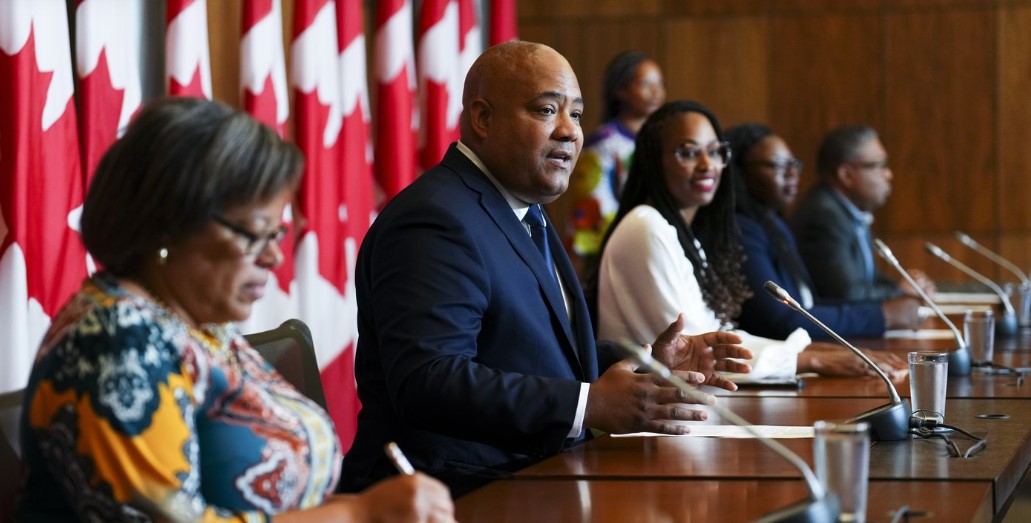
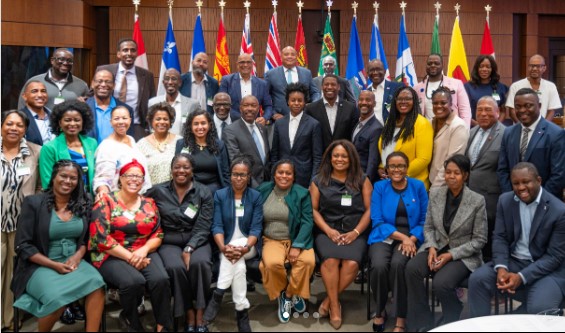
This August, the cameras on Parliament Hill were trained exactly where you would expect: the federal heavyweights. Mainstream desks ran the standard gallery of Ottawa MPs smiling on the steps, framing the historic incorporation of the Canadian Congress of Black Politicians (CCBP) as a heartwarming milestone for parliamentary diversity.
They missed the real story.
While Ottawa provided the neoclassical backdrop, the actual architecture of this 150-member non-partisan machine was quietly engineered in the municipal trenches of the Greater Toronto Area (GTA). In Canada’s rigid political ecosystem, party lines are treated as sacred borders. A Liberal MP and an NDP provincial legislator rarely share oxygen, let alone a corporate registry.
By voting unanimously to bind themselves to a single national entity, these politicians didn’t just break a glass ceiling, they built an invisible super-caucus. And the engineers driving the machinery are three municipal leaders who understand that real systemic leverage isn’t found in federal speeches, but on the local pavement.
The Capital Strategy: Martin Reid’s War on the “71% Tax”
To understand why the CCBP exists, you have to look at the numbers mainstream media routinely buries. A landmark study by Carleton University and Operation Black Vote Canada (OBVC) exposed a grim reality: 71% of Black politicians in Canada face targeted discrimination and systemic roadblocks while running for or serving in public office.
Often, this discrimination is financial. Black candidates are routinely locked out of traditional, multi-generational “old-boy” donor networks.
Enter Mississauga Ward 9 Councillor Martin Reid.
Elected in 2022 on a hyper-local platform of youth advocacy and food security, Reid has been quietly tapped as the National Treasurer of the CCBP. It is a strategic appointment. By placing a GTA municipal leader over the wallet, the CCBP is positioning itself to tackle the capital problem head-on.
“The 71% statistic isn’t just an abstract data point; it’s a structural campaign finance issue,” Reid told our newsroom. “When you don’t have access to legacy donor pools, your campaign is starved before it even starts. As Treasurer, our goal with the CCBP isn’t just administration. We are building a centralized, national network to democratize access to capital, mentorship, and campaign infrastructure. We are structurally lowering the barrier to entry so the next generation doesn’t have to pay that 71% tax just to get their names on a ballot.”
The Pipeline Architecture: Kathy McDonald’s Frontline Defense
If Martin Reid is securing the capital, Peel District School Board (PDSB) Trustee Kathy McDonald is securing the pipeline.
Representing Brampton Wards 3 and 4, McDonald is an institutional warrior. She spent over a decade on the absolute frontlines fighting systemic anti-Black racism inside the PDSB, an exhausting campaign that ultimately forced a historic provincial intervention in 2020.
In mainstream political commentary, school board trustees are often dismissed as lower-tier officials. The CCBP’s matrix turns that assumption on its head. By placing McDonald on the national executive, the congress is acknowledging a fundamental truth: you cannot build a pipeline of federal Black leaders if you do not protect Black youth at the public school level.
“For too long, federal and provincial governments have treated education policy as a siloed, municipal issue,” McDonald stated bluntly. “But the trauma and systemic exclusion Black children face in our classrooms directly dictate who gets to succeed in corporate Canada or walk the halls of Parliament later in life. My role in the CCBP is about ending the isolation trustees face. We are creating a direct pipeline where local educational insights can be weaponized into federal and provincial policy. Ottawa can no longer ignore the grassroots ground game.”
The Suburban Expansion: Colleen James and the Tech Corridor
For decades, Black political advocacy in Canada was viewed through a hyper-concentrated Toronto lens. But the demographics of the diaspora are shifting rapidly. As housing costs soar, Black families and newly arrived immigrants are bypassing the urban core, driving massive population growth in mid-sized Ontario hubs.
Waterloo Regional Councillor Colleen James is the face of this shifting geography. Elected as the first Black woman to Waterloo’s regional council in 2022, James balances her political duties with running Divonify, an equity and inclusion consultancy operating in Canada’s premier tech corridor.
James brings a distinct corporate and regional sophistication to the CCBP, focusing heavily on how infrastructure, transit, and tech-sector employment equity can be standardized outside the GTA’s traditional borders.
“The resource gap between established Toronto-centric organizations and rapidly growing diaspora communities in regional hubs like Waterloo, Kitchener, and Cambridge is vast,” James explained. “The CCBP allows us to build a regional bridge. We are ensuring that a Black family moving to a suburban tech corridor has access to the same institutional protections, funding opportunities, and political advocacy as someone living in downtown Toronto. We are standardizing Black political equity across the entire map.”
The Hidden Influence: A Post-Partisan Playground
The true, hidden influence of the CCBP lies in its ability to completely bypass traditional political gatekeepers. In the Westminster system, party discipline is ruthless. If a federal Liberal MP wants to funnel resources into a community project, they must navigate a maze of partisan ministries, provincial pushback, and opposition blockades.
The CCBP creates a backdoor.
Behind closed doors, a municipal councillor in Mississauga or a regional leader in Waterloo can sit at the same table as a federal MP or a provincial MLA from an entirely different party. They can share policy blueprints, coordinate on local zoning laws, and align municipal budget requests with upcoming federal grants, all completely insulated from the theater of party politics.
It is a sophisticated, post-partisan playground. By aligning by identity and shared systemic struggle rather than party color, the CCBP has created a silent legislative lobby that operates beneath the surface of Canadian media radar.
The honeymoon on Parliament Hill will eventually fade, and the brutal machinery of the next election cycle will test this fragile alliance. But for now, the message from the GTA architects is clear: the rules of engagement have changed. Black political representation in Canada is no longer about filling seats—it is about coordinating power.
Related Stories on Black Political Influence & Governance
As more Black and diaspora candidates enter local politics, community organizations are creating spaces for voters to engage directly with those seeking public office. This story explores Nigerian-Canadian political participation and the growing role diaspora communities are playing in Ontario’s municipal elections.
Barack Obama’s reflections on democracy offer a wider look at representation, civic participation and the long struggle to expand political inclusion. The story provides useful context for understanding why representation within political institutions matters beyond individual election victories.
Nigeria’s return to an influential United Nations position highlights another dimension of Black political and institutional power: representation within global governance. The article examines what stronger African participation in international decision-making can mean for the continent and its diaspora.