









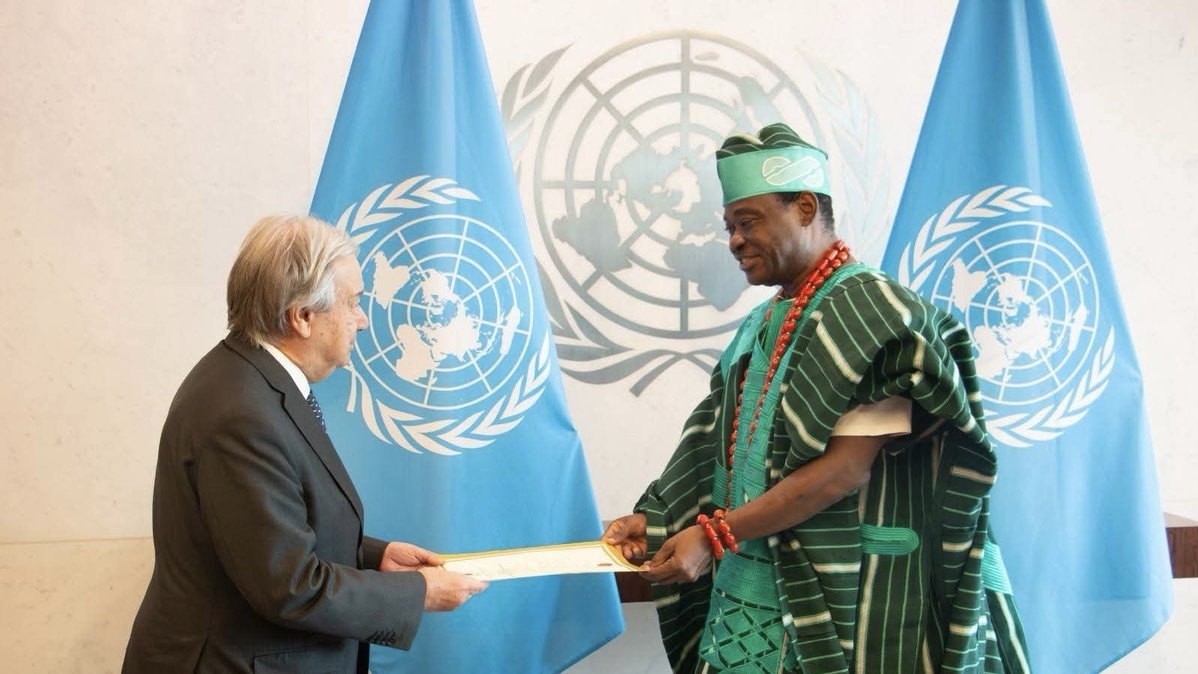
After a prolonged period of operating with limited top-tier representation in New York, Nigeria has formally reclaimed its full diplomatic standing at the United Nations.
On Monday April 20, 2026, Senator Jimoh Ibrahim officially presented his letters of credence to Secretary-General António Guterres, marking a pivotal end to a gap where the nation relied on interim chargés d’affaires to manage its global interests.
For the black immigrant community in Canada, this “reentry” is more than a bureaucratic formality, it signals a renewed push by Africa’s most populous nation to lead on the world stage.
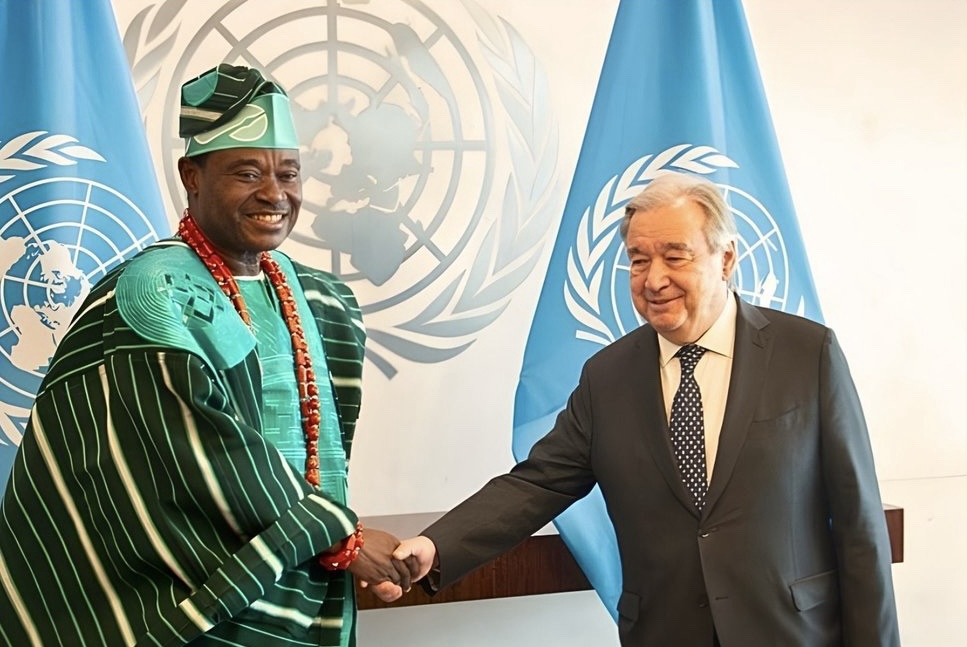
Ibrahim’s accreditation arrives at a critical juncture as President Bola Tinubu’s administration intensifies its campaign for a permanent seat on the UN Security Council, arguing that a 21st-century global governance system cannot remain credible while excluding a sovereign nation of over 236 million people.
A Strategy of “Renewed Hope” Abroad
The new envoy has hit the ground running, assuring the international community that Nigeria is ready to confront “generational problems” through multilateral cooperation.
This diplomatic offensive is tightly linked to the “Renewed Hope” agenda, which seeks to stabilize the domestic economy while repositioning Nigeria as a stabilizing force for regional security.
For the diaspora, a stronger Nigerian voice at the UN often translates to better advocacy for African-led frameworks in migration, trade, and digital inclusion, issues that directly impact the lives of immigrants navigating global systems.
The timing is significant as Nigeria also transitions its humanitarian strategy. With international funding shrinking, the UN in Nigeria is shifting toward “localization,” where Nigerian-led institutions take the front seat in managing internal displacement and crisis response.
This shift reflects a broader demand for sovereignty and self-reliance that was a centerpiece of Vice President Kashim Shettima’s address at the recent General Assembly.
Bridging the Gap with the Diaspora
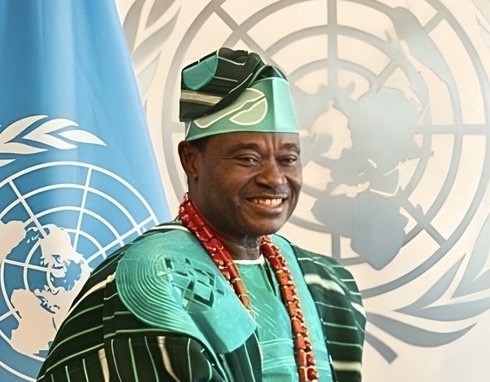
Diaspora engagement remains a cornerstone of this new diplomatic chapter. During high-level engagements in New York, the Nigerian delegation emphasized that the diaspora is not merely a source of remittances but a strategic partner in the nation’s national development.
From advocating for debt relief to bridging the digital divide, the mission’s goal is to ensure that the “Africa Included” mandate becomes a reality in global policy.
As Nigeria reasserts its influence, the move is being watched closely by the immigrant media in Canada and beyond. The success of this reentry will be measured not just by the credentials presented in New York, but by how effectively the mission can turn global advocacy into tangible progress for Nigerians both at home and across the Atlantic



How Three Local Politicians Built Canada’s First Black Political Power Bloc - Afro Diaspora Pulse
Apr 21, 2026[…] Nigeria Fills Key UN Seat: A Diplomatic Resurgence for the Diaspora […]