









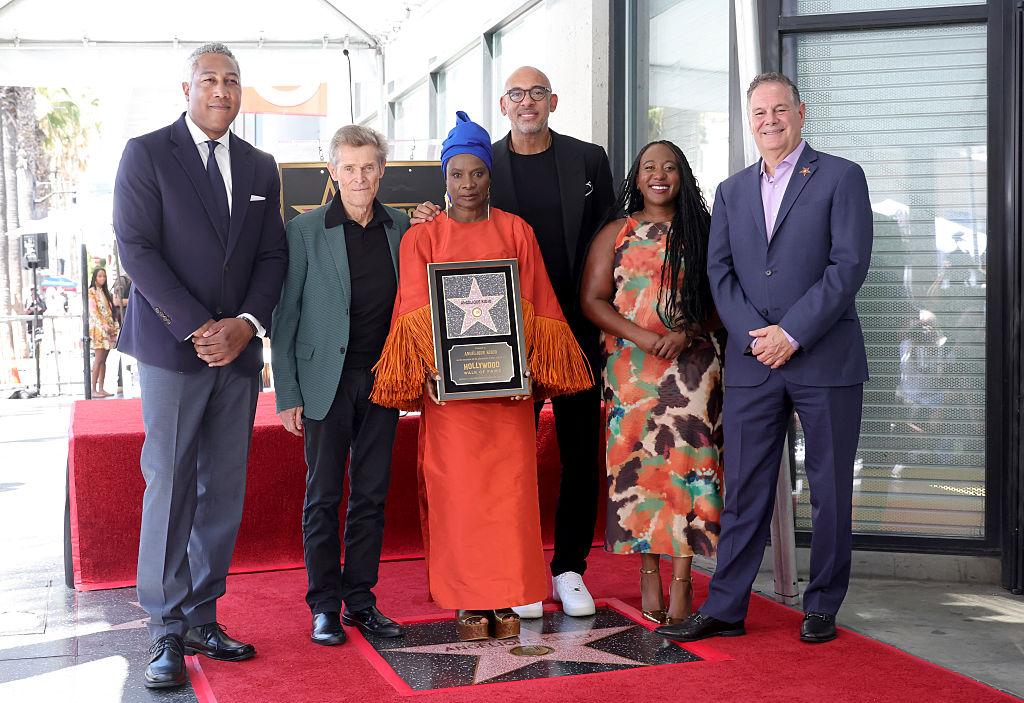
Angélique Kidjo has officially made Hollywood history.
On August 18, 2026, the five-time Grammy-winning Beninese musician received the 2,854th star on the Hollywood Walk of Fame in Los Angeles, becoming the first African musician and first Black African performer to receive the prestigious honour.
The ceremony took place at 7011 Hollywood Boulevard in the Recording category, with Oscar-nominated actor Willem Dafoe and Recording Academy CEO Harvey Mason Jr. among the speakers. The Hollywood Chamber of Commerce also declared August 18 “Angélique Kidjo Day” in Hollywood.
For Kidjo, however, the star represents something larger than one artist’s career.
It is a marker of how African music has travelled from the streets and traditions of West Africa to some of the world’s most influential cultural institutions.
“It’s not just my star, it’s our star.”
That sentiment, which Kidjo shared ahead of the ceremony, captured the wider significance of the moment.
Why Angélique Kidjo’s Hollywood Star Is Historic
Angélique Kidjo is the first African musician to receive a star on the Hollywood Walk of Fame and the first Black African performer to receive the honour.
That distinction matters because Africa has long been central to the development of global popular music, while African musicians have historically had limited representation within major Western entertainment institutions.
Kidjo’s star places a musician born in Benin permanently on one of the world’s most recognizable entertainment landmarks.
The Hollywood Walk of Fame, administered by the Hollywood Chamber of Commerce, has honoured thousands of entertainers since the first stars were installed in 1960. Its official database now records Kidjo as the recipient of star number 2,854.
Her recognition also comes at a time when African music has become increasingly influential internationally, with artists from across the continent building audiences far beyond Africa.
Angélique Kidjo Receives the 2,854th Hollywood Walk of Fame Star
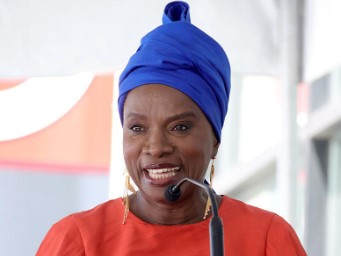
The ceremony on August 18 brought together figures from film, music and African entertainment.
Willem Dafoe praised Kidjo’s extraordinary energy and commitment, while Harvey Mason Jr. highlighted the lasting influence of her work on the global music community. Benin-born actor Djimon Hounsou and Nigerian musician Adekunle Gold were also among those present.
The event was hosted by Variety correspondent Angelique Jackson.
Before Kidjo unveiled the star, Ron Frierson, president and CEO of the Hollywood Chamber of Commerce, officially declared August 18 “Angélique Kidjo Day” in Hollywood.
The ceremony was not simply a formal presentation. Kidjo used the occasion to speak about Africa’s enormous contribution to global music.
“We Africans don’t know what we’ve given to the world,” she said during her speech, emphasizing the continent’s continuing influence on music around the world.
She then erupted into song after thanking her family and team.
Who Is Angélique Kidjo?
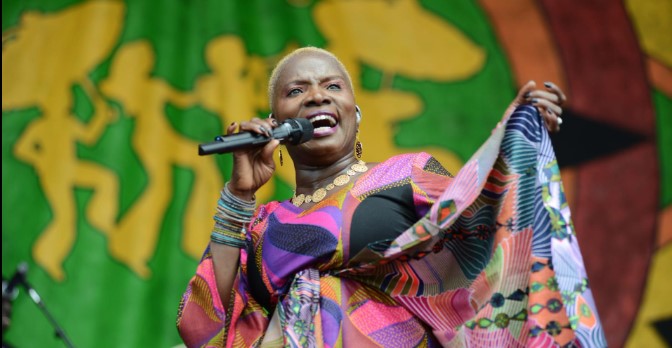
Angélique Kidjo performs during Vodun Days 2026 in Benin. The Grammy-winning Beninese artist received a Hollywood Walk of Fame star in August 2026.Angélique Kidjo is a Beninese singer, songwriter and performer whose career has stretched across more than four decades.
Born in Cotonou, Benin, she began performing as a child and later moved to Paris in 1983, where she studied jazz and developed the international career that would eventually make her one of Africa’s most recognized musical figures. UNICEF documents her early life, musical influences and long-running advocacy work.
Her sound has never been confined to one genre.
West African rhythms sit alongside elements of funk, jazz, pop, soul and other international musical traditions. That ability to cross musical boundaries became one of the defining characteristics of her career.
Her international breakthrough included songs such as “Agolo” and “Batonga,” while albums including Logozo, Black Ivory Soul, Eve, Celia and Mother Nature helped establish her reputation as a major global artist.
The Recording Academy lists Kidjo with five Grammy wins and 16 nominations. Her Grammy-winning work includes Djin Djin, Eve, Celia and Mother Nature.
For additional background, the Recording Academy’s Angélique Kidjo profile provides a record of her Grammy nominations and wins.
How Many Grammys Has Angélique Kidjo Won?
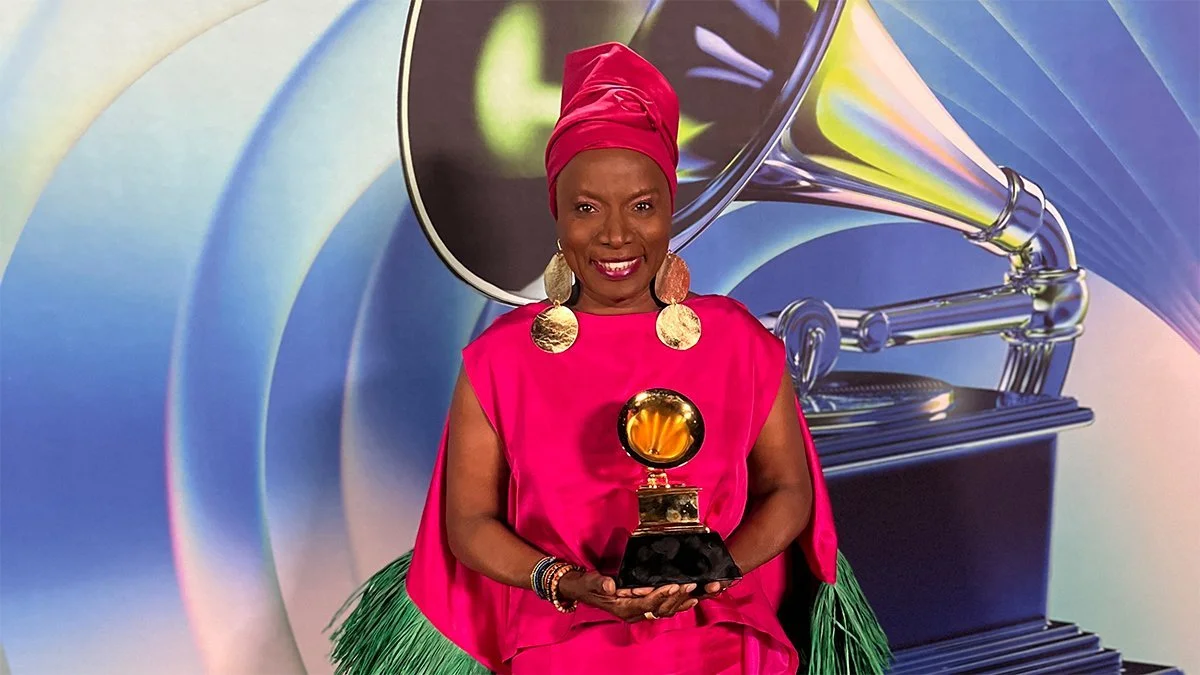
Angélique Kidjo has won five Grammy Awards, making her the most Grammy-winning African musician in history according to the Recording Academy’s historical coverage of African Grammy winners.
Her Grammy record reflects the evolution of her career and the changing language used to classify music from Africa and the wider global music community.
Her most recent Grammy win came for Mother Nature, which won Best Global Music Album at the 64th Grammy Awards.
The album included collaborations with artists including Burna Boy and Mr Eazi, illustrating Kidjo’s ability to connect an earlier generation of African music with the artists shaping contemporary African popular culture.
Angélique Kidjo’s Music Built Bridges Between Generations
Kidjo’s influence cannot be measured solely through awards.
Over the years, she has collaborated with artists from different generations and musical traditions, including Burna Boy, Yo-Yo Ma, Alicia Keys, Peter Gabriel, Bono, Sting and John Legend.
That breadth is significant.
Kidjo emerged internationally at a time when African music was often marketed in narrow categories outside the continent. Instead of separating African sounds from global music, she repeatedly placed them in conversation with other traditions.
The result was a career that made African musical ideas accessible to audiences who may have never encountered them otherwise.
The UNICEF profile of Angélique Kidjo also documents another dimension of her career: her work advocating for children, girls’ education and climate action.
Her Hollywood Recognition Extends Beyond Music

Angélique Kidjo has served as a UNICEF Goodwill Ambassador since 2002, advocating for children's rights, girls' education and climate action.Kidjo’s influence is also rooted in advocacy.
She has served as a UNICEF Goodwill Ambassador since 2002, using her international platform to advocate for children’s rights and girls’ education. UNICEF describes her as a campaigner who has travelled extensively to support programmes focused on children and young people.
Her activism is closely connected to her work through the Batonga Foundation, which she founded in 2006.
Batonga focuses on adolescent girls and young women in Africa, with the goal of helping them access education, develop skills and shape their own futures.
The Batonga Foundation’s history explains how Kidjo established the organisation around the belief that investment in African girls and young women can help transform communities.
That work has become inseparable from the public image of the artist.
As Willem Dafoe noted at the Hollywood ceremony, Kidjo’s humanitarian work is not separate from her artistic identity; it is part of the same commitment to people and culture.
Angélique Kidjo’s Hollywood Star Follows Decades of Recognition

Angélique Kidjo at the Library of Congress during the 2023 Gershwin Prize eventsThe Hollywood Walk of Fame ceremony did not arrive in isolation.
Kidjo has accumulated major international honours throughout her career.
In 2015, she received the Crystal Award from the World Economic Forum. She was also named to TIME’s list of the 100 most influential people in the world in 2021.
Her advocacy has taken her to the United Nations, where she has repeatedly used music and public speaking to address issues affecting children and young people.
UNICEF records decades of her involvement in campaigns relating to girls’ education, child protection, health and climate action.
In January 2026, she returned to Benin as part of a UNICEF mission, visiting programmes supporting children’s rights and meeting young people involved in community initiatives.
The Hollywood star therefore represents the latest chapter in a career that has consistently combined entertainment with advocacy.
What Angélique Kidjo’s Hollywood Star Means for African Music

The significance of Kidjo’s recognition extends beyond Benin.
African musicians have increasingly become central figures in the international music economy, but Kidjo belongs to an earlier generation that helped build the infrastructure for that global recognition.
Her career predates the current explosion of Afrobeats and African pop on international charts.
She worked across borders before streaming platforms made it easier for an artist in Lagos, Accra, Johannesburg or Cotonou to reach listeners in London, Paris, Toronto or Los Angeles directly.
Her Hollywood star therefore offers an opportunity to view the current African music boom through a longer historical lens.
The global success of today’s African artists did not emerge overnight.
There were musicians, producers and cultural advocates who spent decades creating pathways for African sounds to be heard internationally.
Kidjo is one of them.
African Women Artists and the Legacy Angélique Kidjo Leaves Behind
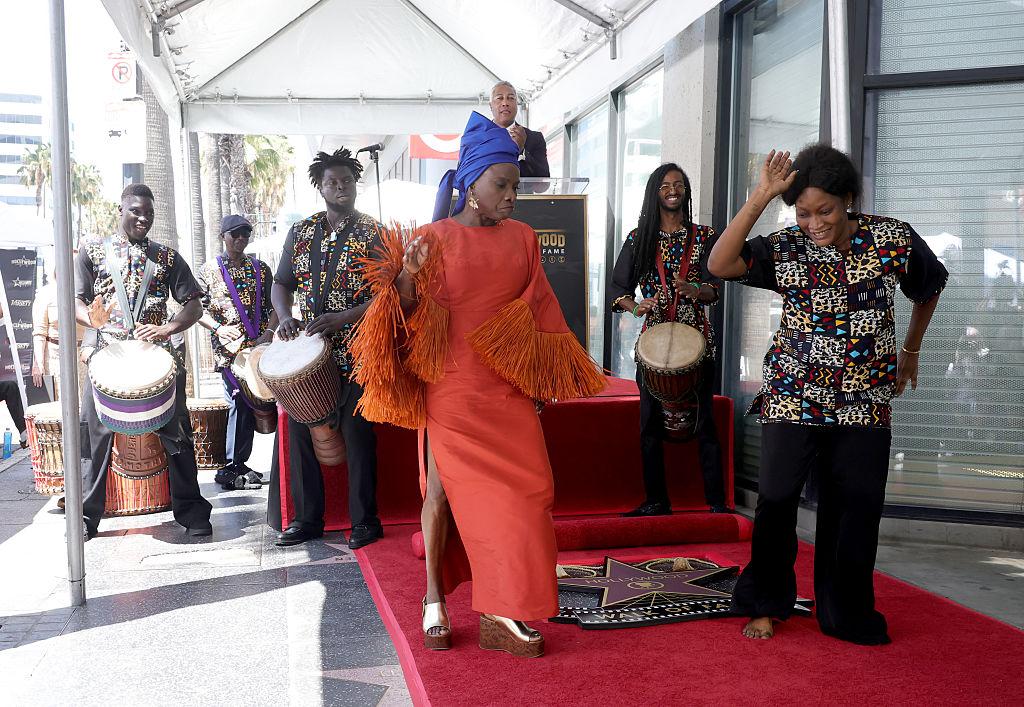
Angélique Kidjo performs during Hollywood Walk of Fame in Carlifonia in August 2026.There is another layer to the milestone: representation for African women.
Kidjo has repeatedly emphasized that young African women should not be expected to reproduce her career. Instead, she has encouraged them to develop their own voices.
That philosophy is consistent with her work through Batonga, where education and empowerment are central to the organisation’s mission.
Her Hollywood star consequently becomes both an award and a public marker of possibility.
A young girl watching the ceremony from Benin, Nigeria, Ghana, Kenya or elsewhere in Africa can see an African woman whose identity was not erased in order to achieve international recognition.
That may ultimately be one of the most enduring aspects of the honour.
Angélique Kidjo’s 2026 Milestone Comes With a New Chapter
Kidjo’s Hollywood recognition arrives during another active period in her career.
Her 2026 album HOPE!! features contributions from artists including Pharrell Williams, Nile Rodgers and Quavo, demonstrating that her willingness to collaborate across generations remains intact.
That matters because the Hollywood star is not simply a retrospective honour.
Kidjo continues to record, perform and advocate.
At 66, she remains an active participant in the evolution of African and global music rather than a figure remembered only for past achievements.
A Timeline of Angélique Kidjo’s Career
| Year | Milestone |
|---|---|
| 1960 | Born in Cotonou, Benin |
| 1983 | Moves to Paris amid political instability in Benin |
| 1990s | Gains international recognition through albums and songs including “Batonga” and “Agolo” |
| 2002 | Appointed UNICEF Goodwill Ambassador |
| 2006 | Founds the Batonga Foundation |
| 2008 | Wins her first Grammy for Djin Djin |
| 2015 | Receives the World Economic Forum Crystal Award |
| 2021 | Wins Grammy for Mother Nature and is named to TIME’s 100 Most Influential People |
| 2023 | Receives the Polar Music Prize |
| July 2025 | Named to the Hollywood Walk of Fame Class of 2026 |
| August 18, 2026 | Receives the 2,854th Hollywood Walk of Fame star |
Career and award information is supported by the Recording Academy, UNICEF and Batonga Foundation.
What Comes Next for Angélique Kidjo?
The Hollywood star closes one chapter of Kidjo’s career while leaving another open.
Her influence now sits across several worlds: African music, global pop, humanitarian advocacy, girls’ education and cultural diplomacy.
The most interesting question is no longer whether African music belongs on the world’s biggest stages.
That argument has largely been settled.
The question is how much further African artists can push those boundaries.
Kidjo’s own career provides part of the answer. Her success was built by refusing to treat African identity and international ambition as opposing ideas.
Her Hollywood star now makes that philosophy permanent on Hollywood Boulevard.
Conclusion: Angélique Kidjo’s Star Is Bigger Than Hollywood
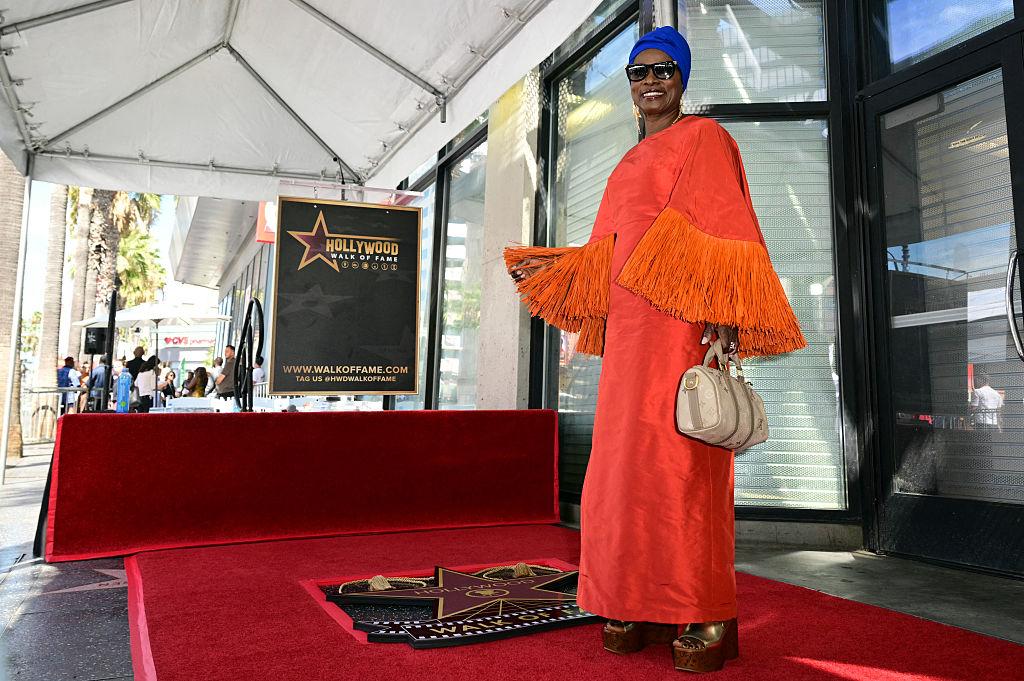
Angélique Kidjo arrived in Hollywood not simply to collect another award.
She arrived carrying Benin, West Africa, generations of African musicians and the young women she has spent years encouraging to dream beyond imposed limits.
On August 18, 2026, her name was permanently added to the Hollywood Walk of Fame.
The 2,854th star belongs to Angélique Kidjo.
But the meaning of the moment reaches much further.
For an African musician who spent more than four decades taking West African sounds into global spaces, Hollywood has now placed her name on one of its most visible cultural landmarks.
And for the generations coming after her, the message may be even more important:
The door is open.