





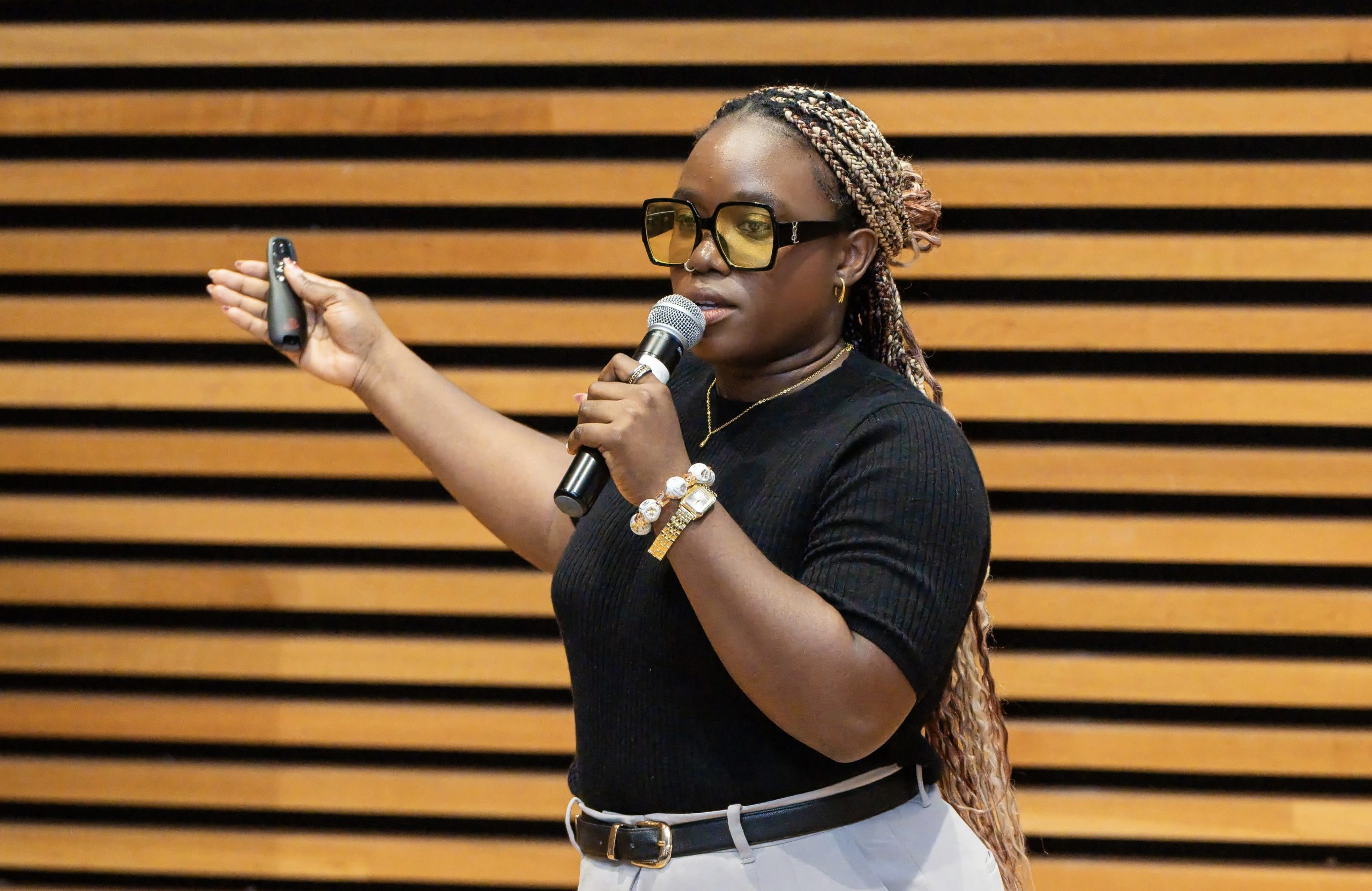




Sarah Kadoon Ajekwe is building SheltHer, a safety technology venture designed to help people seek assistance discreetly during emergencies. From Nigeria to Toronto, her journey combines experience, technology, entrepreneurship and community leadership to explore how tools can make communities safer.
How Sarah Kadoon Ajekwe Turned Personal Experience Into a Safety Venture
Sarah Kadoon Ajekwe’s work with SheltHer grew from a question that became increasingly personal: what if someone in danger could ask for help without having to openly reach for their phone?
Ajekwe says she experienced an attempted abduction by an Uber driver in Accra, Ghana, in January 2025. Later that year, she says she was stalked by a man who did not accept her rejection, leading her to stay with a friend for safety.
Those experiences strengthened an idea she had already been exploring with her co-founder, Sylvia Mwitumi.
SheltHer was rebuilt from the ground up in October 2024 and launched in 2025 as a mobile safety platform focused on discreet emergency support. The concept has also explored wearable technology, giving users another possible way to seek help when reaching for a phone may not be practical.
The idea speaks to a wider concern. UN Women identifies stalking, online harassment and other forms of technology-facilitated violence as growing concerns for women and girls.
Sarah Kadoon Ajekwe and Growing SheltHer in Canada
As a first-year student pursuing an MBA in Technology Leadership at York University’s Schulich School of Business in Toronto, and co-founder of SheltHer, Schulich highlights Sarah as a visionar with leadership roles as the York University President’s Ambassador, Athletics Manager and International Ambassador Lead at Schulich.
Sarah is also developing SheltHer while pursuing an MBA in Technology Leadership at York University’s Schulich School of Business in Toronto.

Since its launch, SheltHer has developed a grassroots community of more than 100 people, attracted early users, participated in accelerator programmes and hosted community and wellness events.
The venture has also received awards and more than $10,000 in non-dilutive funding, according to information provided by Ajekwe.
Her story sits within a wider technology conversation. Digital tools can create new ways to access support, but they can also introduce new risks. UN Women notes that technology can both facilitate and intensify violence against women, making safety-focused technology an important area for continued discussion.
Beyond SheltHer: What Sarah Kadoon Ajekwe Is Also Building
Sarah continues to solidify her standing as a prominent tech entrepreneur and co-founder of SheltHer through her ongoing momentum from the inaugural K4 Black Innovation Alliance (K4BIA) Summer Summit.
Held in Toronto through a partnership between Keiretsu Forum Canada and Narro Ventures, the summit serves as a vital platform to bridge capital gaps for high-potential Black founders.
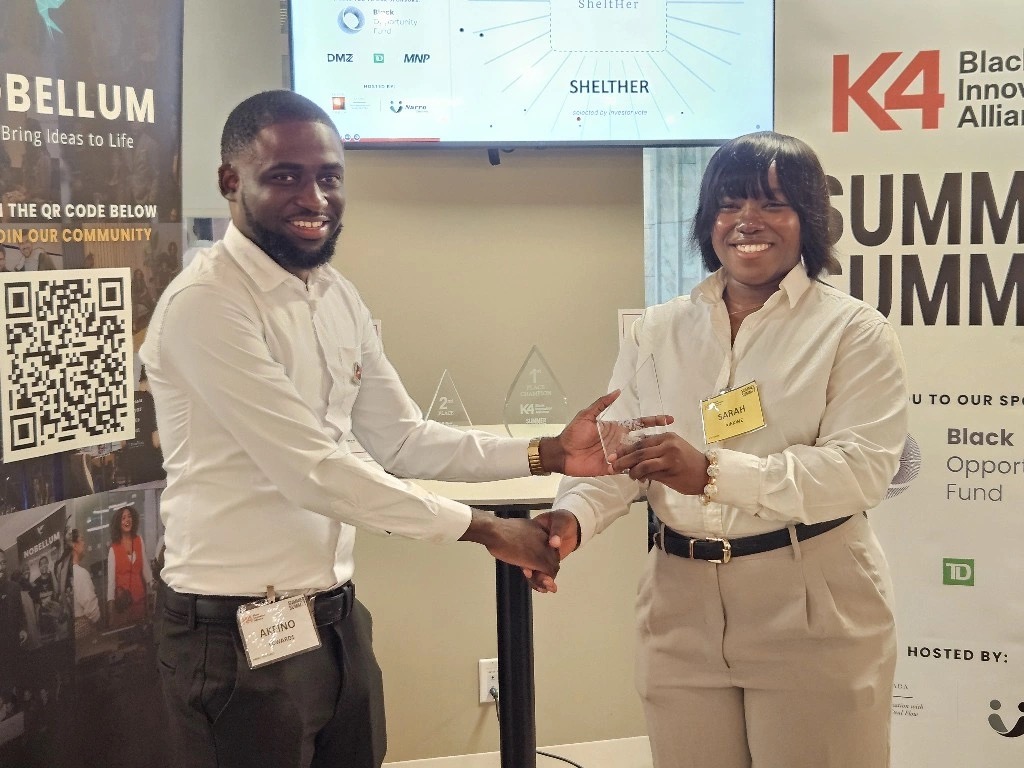
As a standout presenter in a highly competitive pool, Ajekwe holds a third-place distinction, a milestone backed by ecosystem champions like the Black Entrepreneurship Alliance (BEA) and the Black Opportunity Fund.
This accolade consistently highlights both her strategic marketing acumen and SheltHer’s expanding footprint within the inclusive innovation landscape.
Sarah Kadoon Ajekwe’s work extends beyond her startup.
Through Tech 4 Her Africa, in collaboration with IBM, she has mentored more than 200 African women in marketing and design. She has also continued taking on leadership and volunteer opportunities while building her career in Canada.
A significant thread runs through her work: technology is not simply something to build. It is something that can respond to problems people experience in everyday life.
Her approach also connects with the wider growth of African and Black entrepreneurship in Canada. She is building around a simple idea: when technology responds to a real human problem, it should be designed with the user’s reality in mind.
For SheltHer, that means considering what happens when someone is frightened, being followed or facing an emergency and cannot safely use their phone in the usual way.
The next stage of Ajekwe’s journey will determine how that idea develops as SheltHer grows. For now, her path from Nigeria to Toronto reflects a generation of African founders using technology not only to build businesses, but to respond to problems they understand personally.