





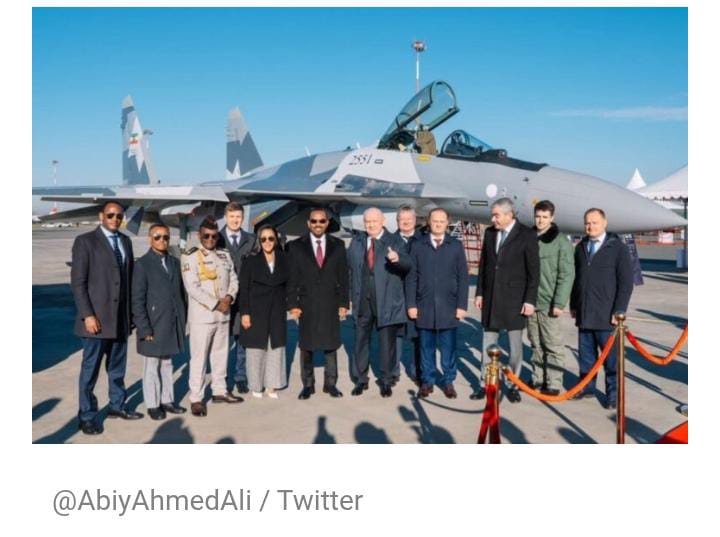


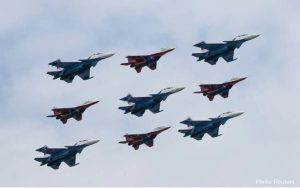
The Prime Minister of Ethiopia, Abiy Ahmed, announced a major expansion of its military capabilities on 28 October 2026 following the delivery of 12 Russian-made Su-35 fighter jets and plans to acquire four S-400 air defence system batteries. The announcement was made while the president was present in the third Russia-Africa Summit in Moscow.
According to Abiy, the fighter jets were delivered under an existing agreement with Russia, arriving a year ahead of the scheduled delivery date. He thanked Russian President Vladimir Putin for facilitating the early delivery, describing the acquisition as an important step towards strengthening Ethiopia’s national security and protecting its airspace. However, the delivery schedule for the four S-400 systems has not been disclosed.
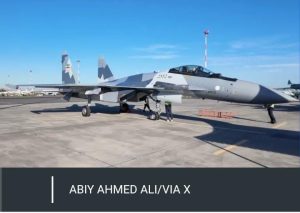
The significance of the military equipment Su-35 Fighter Jets are advanced Russian multirole combat aircraft designed to perform air-to-air and air-to-ground missions. They can engage hostile aircraft, conduct military strikes and defend a country’s airspace. Their acquisition gives Ethiopia additional combat aircraft and strengthens its existing air force.
S-400 Air Defence Systems, unlike fighter jets, is a ground-based missile defence system. It is designed to detect and intercept hostile aircraft, cruise missiles and certain ballistic missile threats. If delivered, the four batteries would strengthen Ethiopia’s ability to defend important military installations and strategic visions.
Why is Ethiopia strengthening its military?
The announcement comes at a time when Ethiopia faces several security challenges. One of them is renewed fighting in the Tigray region and continued armed conflict in Amhara which have increased security concerns for the federal government.
Also, relations between Ethiopia and neighbouring Eritrea have deteriorated, partly over disagreements concerning regional security and Ethiopia’s desire for access to the Red Sea.
Currently, Ethiopia occupies an important strategic position in the Horn of Africa, making its military capabilities significant to the wider regional security environment.
The acquisition therefore comes amid growing concerns about Ethiopia’s internal stability and its relationships with neighbouring countries.
However, the agreement was negotiated earlier, so it cannot automatically be attributed to the latest developments in these conflicts.
The question remains: Why is Russia supplying Ethiopia with these weapons?
The relationship between Russia and Ethiopia extends beyond this recent military agreement.Both countries have maintained military cooperation over several decades.
Meanwhile Russia is also seeking to strengthen its diplomatic, economic and security relationships across Africa. For Russia, military equipment sales provide revenue and strengthen its influence among African governments. For Ethiopia, the relationship provides access to military technology, equipment and defence cooperation.
According to the Stockholm International Peace Research Institute (SIPRI), Russia accounted for 15% of Africa’s major arms imports between 2021 and 2025, making it the continent’s third-largest supplier during that period.
What does this mean for Africa?
Ethiopia’s acquisition raises broader questions about military modernisation, regional security and the growing involvement of foreign powers in Africa’s defence sector.
While stronger defence capabilities may help countries protect their sovereignty, increased military spending also raises questions about affordability, regional tensions and the balance between security investment and social development.
There are also practical considerations such that advanced fighter jets require specialised pilots, maintenance facilities, spare parts and continuous technical support. Acquiring the equipment is only one part of building a sustainable military capability.