











How an engineer’s refusal to accept everyday inconveniences led to the AquaLock Bonnet™, a growing natural-hair platform and community wellness initiatives for women and families.
Titilayo Adeh is an engineer, inventor, educator, entrepreneur and community builder whose work connects technology, textured-hair care and women’s wellness. Based in Brantford, Ontario, and featured on the August 2026 cover of Afro Diaspora Pulse Magazine, she is best known for developing the AquaLock Bonnet, a shower-to-sleep head covering with a waterproof exterior and satin interior.
The idea emerged from a routine millions of women barely questioned: wearing one cap in the shower and replacing it with another bonnet before bed.
Titilayo asked why one product could not perform both jobs.
Drawing on an engineering education at Lancaster University where she graduated with an MSc in Information Technology, Management and Organizational Change in 2015; her professional experience connected to Google Cloud as a Technical Solutions Engineer; beauty entrepreneurship and her own observations of textured-hair routines, she transformed that question into a product.
She then carried the same problem-solving method into BAJNaturals, Hairducateme, photography, beauty services and free community wellness programs.
Her public professional profiles connect her with Lancaster University and technical engineering work at Google, while BAJNaturals identifies Brantford, Ontario, as its base and describes itself as the home of the AquaLock Bonnet™.
Titilayo Adeh’s Engineering Mindset Began at Age Three
Long before she knew the language of engineering, Adeh was already behaving like an investigator.
At three years old, she would find a screwdriver and begin dismantling toy cars, remote controls and household gadgets. Piece by piece, she studied how the objects worked.
Sometimes she successfully reconstructed them. Sometimes she did not.
Her parents saw broken toys and opened appliances. Adeh remembers something different: an early attempt to understand systems.
“They thought I was breaking things,” she recalls. “I was investigating them.”
That distinction has shaped her adult life.
Engineering, in Adeh’s world, is not confined to software, industrial equipment or complex laboratories. It is a way of looking at ordinary life. A routine becomes a process. An inconvenience becomes a design flaw. A repeated complaint becomes evidence that a better solution may be possible.
“I don’t just build products. I build solutions.” — Titilayo Adeh
This mindset also challenges a popular misunderstanding about invention. Innovation does not always begin with an unprecedented scientific discovery. It often begins by improving an object, service or process that people already use.
The Canadian Intellectual Property Office’s introduction to intellectual property states that approximately 90% of patents relate to improvements to existing inventions. That does not confirm a patent or registration for AquaLock; it demonstrates that meaningful innovation frequently comes from redesigning familiar products rather than creating an entirely new category.
Adeh’s question has remained remarkably consistent:
How can this be done better?
How the AquaLock Bonnet Turned a Routine Into an Invention
Some of the most persistent consumer problems survive because they become familiar.
Women shower. They wear waterproof caps to prevent moisture from reaching their hair. Before sleeping, many remove those caps and put on satin or silk bonnets intended to reduce friction and protect their hairstyles.
The process is so ordinary that few people stop to examine it. Titilayo did.
“Why couldn’t one product do both?” she asked.
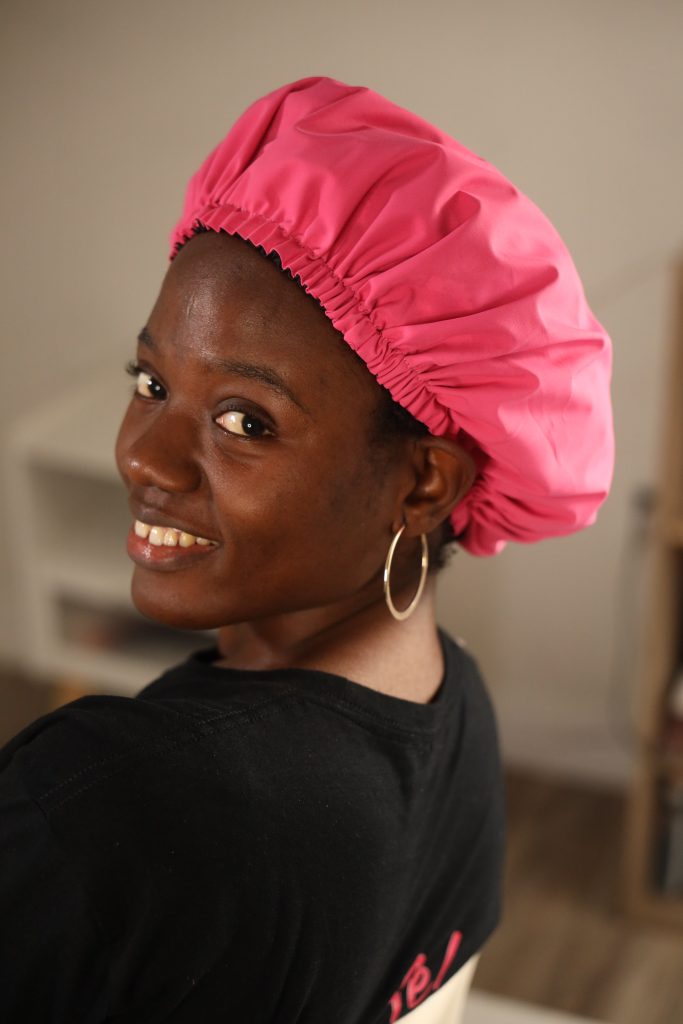
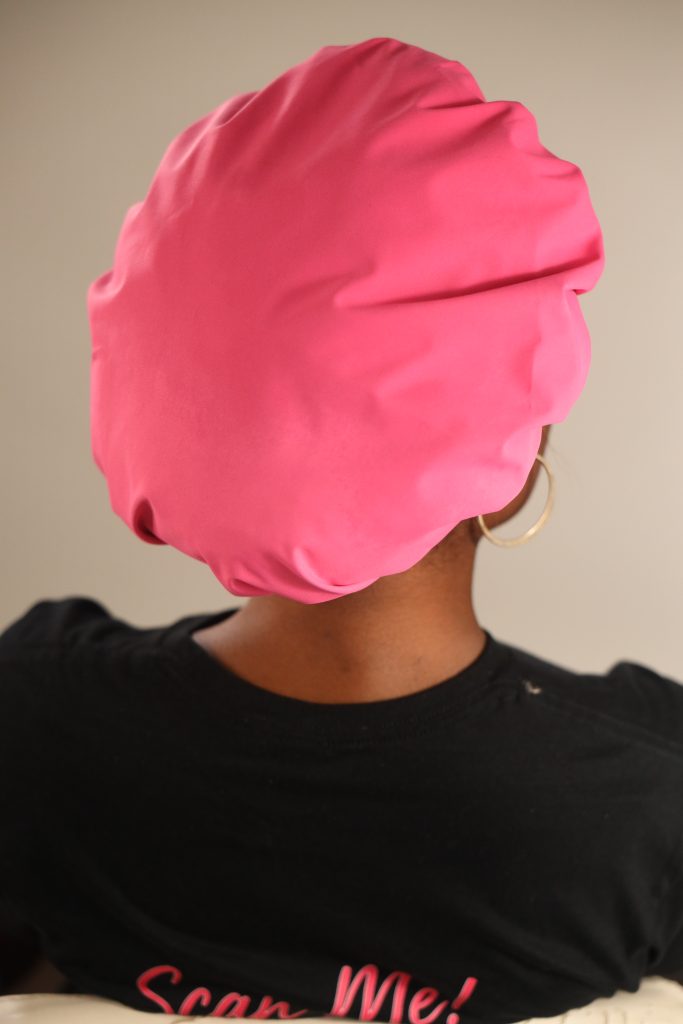
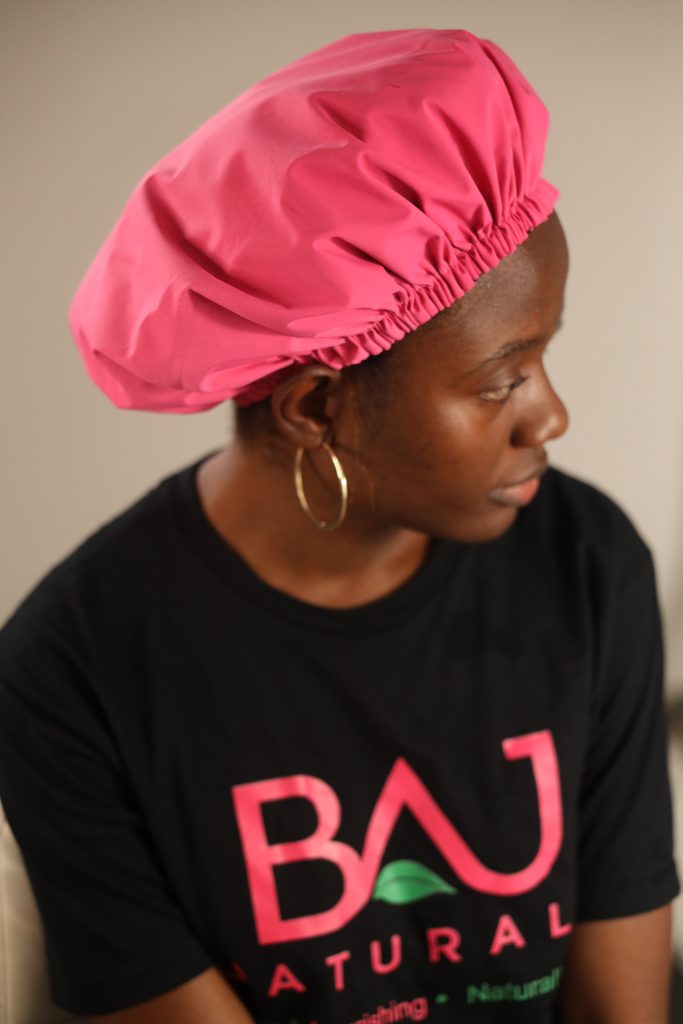
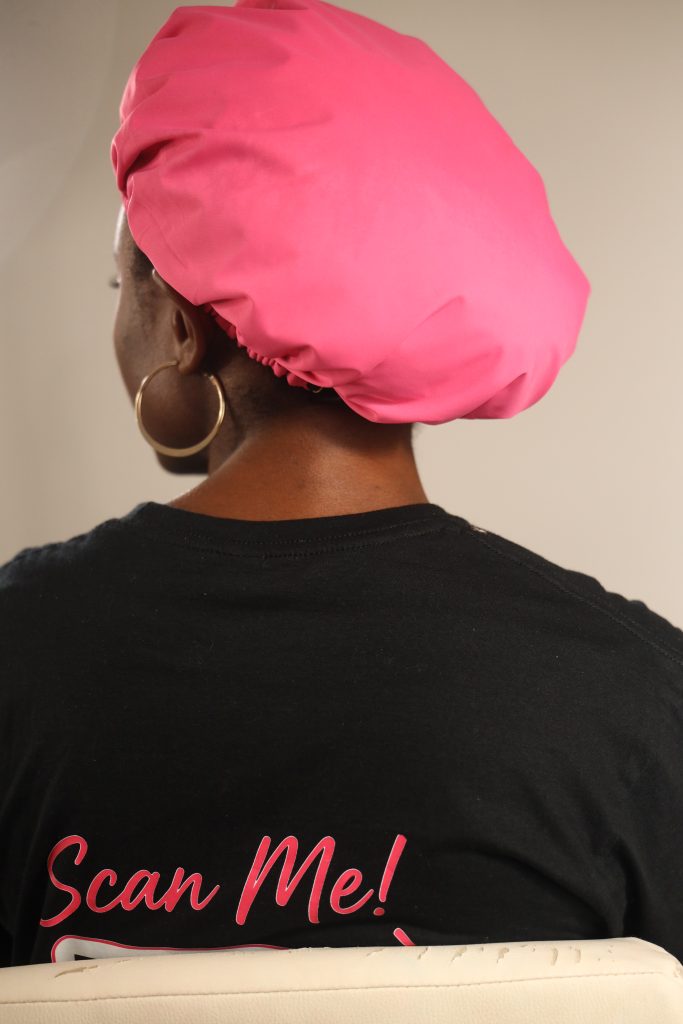
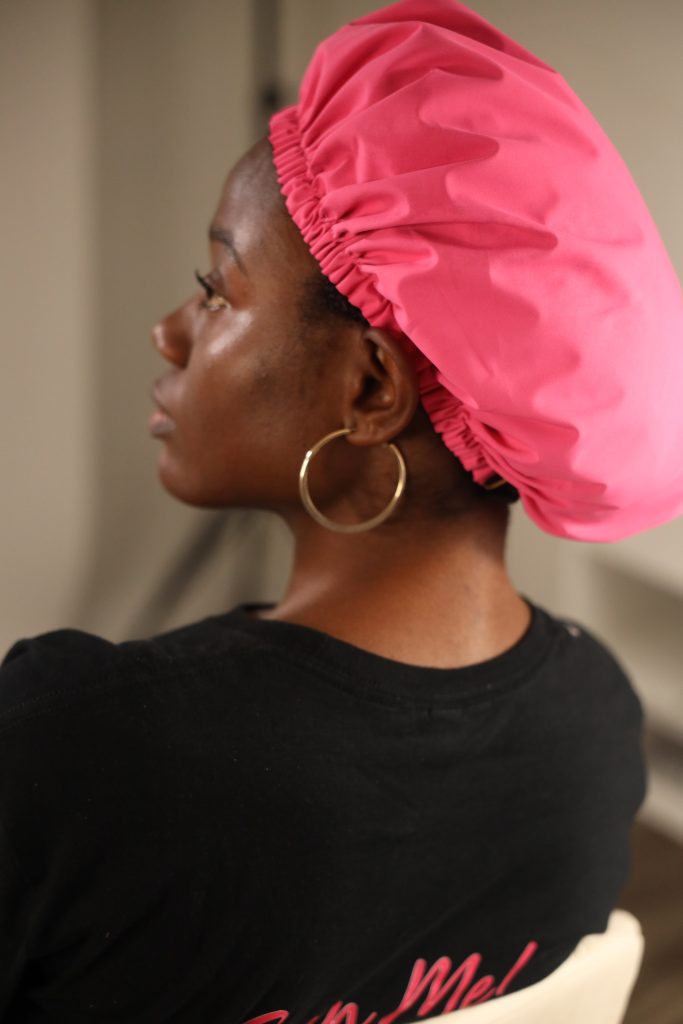
Her answer became the AquaLock Bonnet: a dual-purpose product designed with a waterproof exterior for shower protection and a satin interior for overnight use.
What is the AquaLock Bonnet?
The AquaLock Bonnet which officially launches on September 1, 2026 is a shower-to-sleep hair covering designed to replace separate shower caps and nighttime bonnets. Its waterproof outer layer protects hair from shower moisture, while its satin interior supports overnight hair protection by creating a smoother surface around the hair.
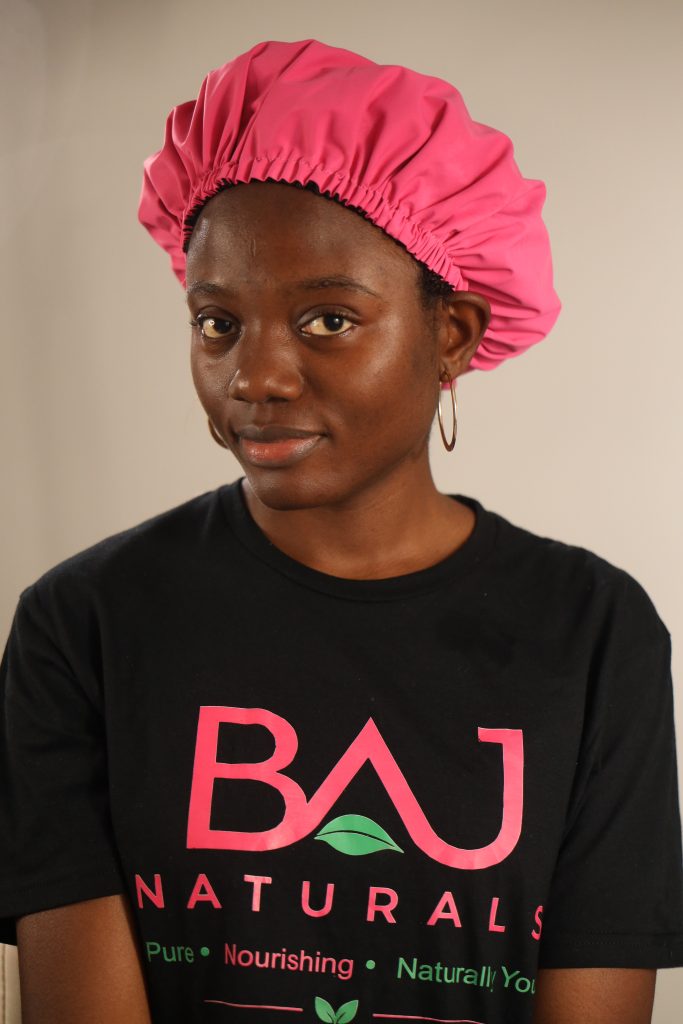
The concept brings two established hair-care functions together.
| Conventional routine | AquaLock concept |
|---|---|
| Put on a waterproof shower cap | Wear the waterproof side during a shower |
| Remove the shower cap | Keep the same head covering |
| Find and put on a satin bonnet | Use the satin-lined interior overnight |
| Store and maintain two products | Maintain one dual-purpose product |
| Risk misplacing one cap | Simplify the routine |
The product’s significance extends beyond convenience. For Titilayo, it represents a model of innovation rooted in observation.
“It’s what it represents,” she explains. “Innovation doesn’t always have to solve the world’s biggest problems. Sometimes it simply makes an everyday routine easier or removes a frustration people have accepted for years.”
That principle makes the AquaLock story especially relevant to African and diaspora entrepreneurs. It shows how lived experience can reveal product opportunities that large companies may overlook.
A woman standing in her bathroom can identify a design problem as legitimate as one discovered in a corporate research department.
Why Natural Hair Innovation Needs Science, Not Myths
The AquaLock Bonnet entered a category where product design and hair health often overlap.
Curly and tightly coiled hair can be more susceptible to dryness, tangling and breakage. The American Academy of Dermatology’s guidance for curly and coily hair recommends maintaining moisture, reducing unnecessary manipulation and limiting friction during sleep. Its dermatologists also recommend using a shower cap to preserve hair between wash days.
These recommendations support the broader functions that shower caps and smooth nighttime hair coverings are intended to perform. They do not constitute a clinical endorsement of any particular commercial bonnet.
That distinction matters to Titilayo.
As she worked in the natural-hair sector, she noticed that consumers were not only struggling to find suitable products. They were also trying to navigate contradictory advice.
One creator recommended a complicated routine. Another rejected it. A viral product promised rapid growth. A family tradition offered a different explanation. Scientific language was often used without scientific evidence.
Titilayo saw an education problem hiding inside a beauty market.
Her response was Hairducateme, a platform created to make hair science easier to understand and apply.
What does Hairducateme do?
Founded in 2026, Hairducateme translates information about textured-hair care into accessible explanations. Its purpose is to help people understand the reasoning behind hair routines rather than forcing them to follow internet trends without context.
The distinction is important.
Hair care is deeply personal. Curl pattern, scalp condition, hair density, climate, styling practices, chemical treatments and individual sensitivities can all affect how a person responds to a product or routine.
Educational content should therefore help consumers ask better questions:
- What problem is this product intended to solve?
- Which ingredients support that function?
- Does the claim rely on research or testimonials?
- Is the advice cosmetic, cultural or medical?
- When should a person consult a dermatologist?
Adeh’s role as an educator complements her work as a product creator. A brand can sell a bottle or bonnet once. Clear information can influence how a customer makes decisions for years.
BAJNaturals Reimagines a Familiar African Ingredient
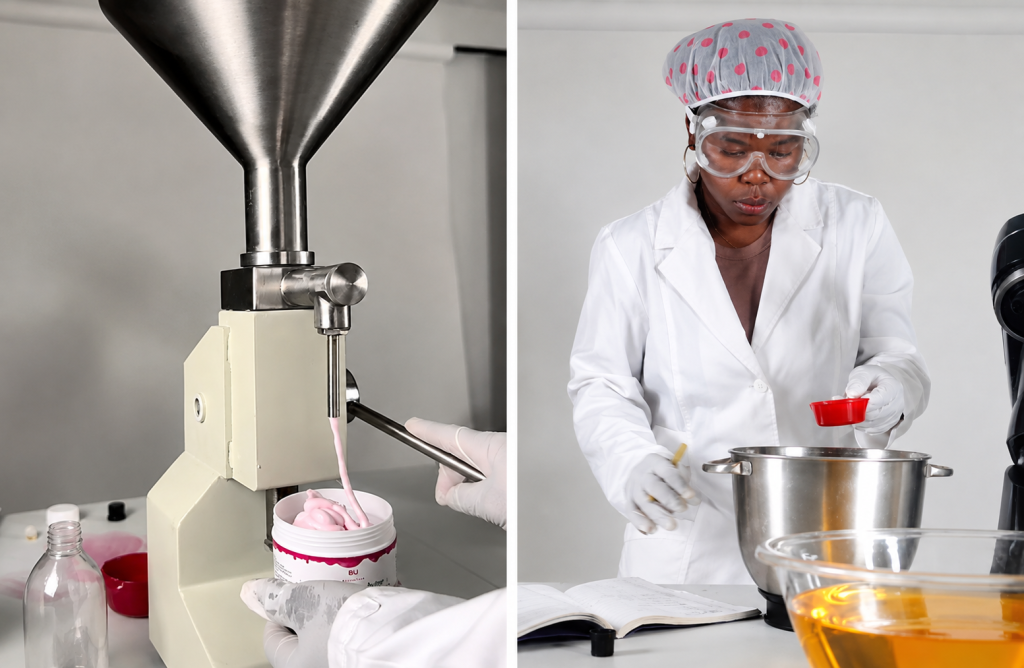
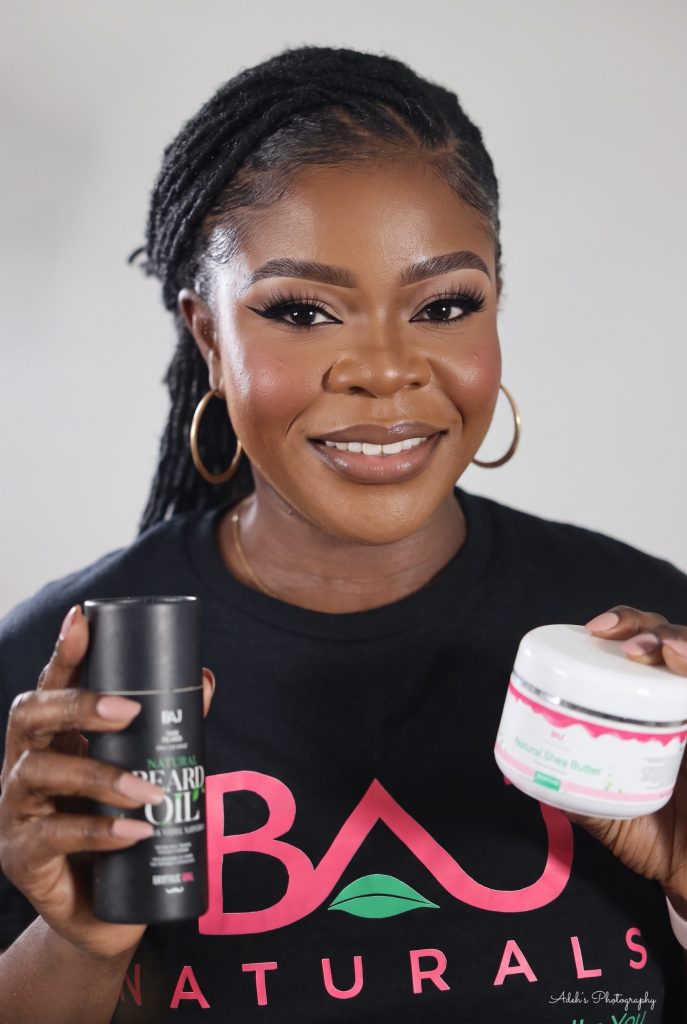
Adeh’s approach can also be seen in BAJNaturals, her natural hair-care brand.
One of the company’s products is whipped shea butter. The ingredient itself is not new. Across parts of Africa, communities have used shea butter for generations in food, skin care and hair care.
The Food and Agriculture Organization’s information on the shea tree describes shea butter as an edible oil and a body and hair cream widely used in West Africa. FAO materials also document the major role women play in collecting shea nuts and processing and marketing the butter.
Adeh grew up appreciating shea butter’s versatility. She also remembers the strong earthy smell that many users simply accepted as part of the product.
Once again, she questioned the assumption.
“What if it could still do everything people loved, but smell beautiful too?”
The answer was BAJNaturals’ whipped version, formulated to make the traditional ingredient more appealing to consumers who value its texture and conditioning qualities but prefer a different scent experience.
Titilayo describes it as one of the brand’s best-selling products. Because sales figures were not provided for independent review, that description should be attributed to her or the company rather than presented as independently audited market data.
The product sits within a much larger history. Shea is not merely a fashionable cosmetic ingredient discovered by international beauty companies. It carries generations of African knowledge, women’s labour, household use and regional trade.
Adeh’s innovation does not erase that history. It adapts a familiar ingredient for a changing consumer.
Titilayo’s Businesses Share One Problem-Solving System
Ask Titilayo which of her ventures represents her most accurately and she struggles to choose.
Each business appears different from the outside. Together, they reveal the same operating philosophy.
| Venture | Founding Year | Primary focus | Problem it addresses |
|---|---|---|---|
| BAJNaturals | Natural hair-care products | Consumers need practical products for growth, moisture and protection | |
| AquaLock Bonnet | September 1, 2026 | Shower-to-sleep hair protection | Women frequently switch between two separate caps |
| Hairducateme | 2026 | Textured-hair education | Hair advice is often confusing, contradictory or unsupported |
| Adehs Photography | 2021 | Photography and storytelling | Families and individuals want important memories preserved |
| Beauty by Akinola Jane | 2020 | Beauty and confidence | Clients want beauty services that respect their features and identity |
| Brant Women’s Soccer & Wellness Club | 2022 | Movement and connection | Women need accessible opportunities for recreation and social support |
| Brant Afrozumba | Fitness, culture and wellness | Families need welcoming, culturally expressive physical activity |
“I’m an engineer who loves beauty,” Adeh says. “A technologist who enjoys storytelling. An educator who believes knowledge should be shared.”
Her ventures are not held together by a single industry. They are held together by a pattern:
- Observe how people behave.
- Identify friction.
- Question why it exists.
- Design a practical response.
- Explain the solution clearly.
- Build community around it.
The process resembles engineering even when the output is a photograph, beauty service or dance program.
From Google Cloud Engineering to Entrepreneurial Courage
Titilayo describes technology and entrepreneurship as two different teachers.
“Google taught me to think systematically,” she says. “Entrepreneurship taught me courage.”
Working in a technical environment showed her how structured teams diagnose problems, test assumptions and build solutions at scale.
Entrepreneurship required something less predictable.
A founder must continue developing an idea before customers understand it, before revenue is consistent and sometimes before family or friends can see its potential.
There is no corporate structure waiting to validate every decision.
That uncertainty became even more demanding as Adeh raised young children, navigated personal challenges and worked to rebuild her career. The pressure did not arrive in neatly separated categories. Family responsibilities, product development, employment, finances and personal recovery often existed at the same time.
Her experiences sharpened her definition of resilience.
Resilience is not blind optimism. It is the ability to keep adjusting without losing sight of the problem being solved.
That quality is particularly relevant in Canada’s entrepreneurial environment.
The federal Women Entrepreneurship Strategy reports that 17.8% of Canadian small and medium-sized enterprises are majority owned by women. Statistics Canada separately reported that majority women-owned businesses represented 19.5% of private-sector businesses in the first quarter of 2025; the difference reflects the datasets and business populations being measured.
The numbers have improved, but they still show that women remain a minority among business owners.
Why Titilayo Adeh’s Story Matters for Black Women in STEM
Adeh’s career occupies another field where women remain underrepresented.
Statistics Canada reported that women represented around 55% of postsecondary graduates but only 30% of STEM graduates in data drawn from the 2021 Census. Earlier research also found that female high-school graduates were less likely than comparable male students to enter postsecondary STEM programs soon after graduation. Readers can examine the broader Statistics Canada research on women in STEM.
Adeh’s visibility therefore matters on several levels.
She is a woman working across engineering and technology. She is an African diaspora entrepreneur building consumer products in Canada. She is a mother balancing family responsibilities with business creation. She is also applying technical thinking to a beauty market that has historically depended heavily on Black women as consumers while often excluding them from ownership, product development and investment decisions.
The federal Black Entrepreneurship Program was created in response to barriers that Black Canadian business owners face, including gaps in access to capital, financial services, networks and business support.
Adeh’s work does not erase those structural challenges. It shows what becomes possible when technical ability, cultural understanding and consumer experience exist in the same founder.
Titilayo Adeh at a glance
| Question | Answer |
|---|---|
| Who is she? | An engineer, inventor, educator, entrepreneur, photographer and community builder |
| Where is she based? | Brantford, Ontario, Canada |
| What is she known for? | AquaLock Bonnet, BAJNaturals and Hairducateme |
| Where did she study? | Lancaster University in the United Kingdom, according to the interview and public professional profile |
| What technology experience does she have? | Her interview identifies her as a former Google Cloud Technical Solutions Engineer |
| What communities does she serve? | Textured-hair consumers, women, families, African diaspora communities and local wellness participants |
| What guides her work? | Improving ordinary systems and leaving situations better than she found them |
Titilayo Adeh’s Community Impact in Brantford
Product development is only one part of Adeh’s work.
Through the Brant Women’s Soccer & Wellness Club and Brant Afrozumba, she has created free opportunities for women and families to exercise, socialize and build supportive relationships.
The word “wellness” is significant.
Many women understand that movement is good for them. Access remains the problem. Cost, childcare, confidence, cultural discomfort, unfamiliar facilities and social isolation can all prevent participation.
A free and welcoming local program reduces several of those barriers at once.
The soccer club offers structured movement and teamwork. Afrozumba adds music, dance and cultural expression. Both initiatives create a reason for people to leave their homes, meet others and participate without needing to present themselves as experienced athletes.
The impact cannot be measured accurately without attendance, retention and participant-outcome data. Those figures were not included in the interview materials.
Still, the model is clear: Adeh notices a gap and builds a practical entry point.
In business, that entry point might be a bonnet.
In community wellness, it might be a football, a dance session and a room where a woman feels welcome.
The Future of AquaLock, Hair Education and African Innovation
Adeh’s next chapter will depend on how successfully she turns several promising ventures into scalable systems.
For AquaLock, that may include product testing, manufacturing consistency, intellectual-property strategy, customer education, distribution partnerships and transparent evidence for any performance claims.
For BAJNaturals, growth may require the difficult balance between handcrafted identity and reliable production volume.
For Hairducateme, the opportunity lies in becoming a trusted bridge between cosmetic science, textured-hair experience and public education.
The community initiatives introduce a separate question: how can free local programs become sustainable without losing their accessibility?
Possible models include municipal partnerships, wellness grants, corporate sponsorship, participant ambassadors and collaborations with health or settlement organizations.
Whatever form the expansion takes, Adeh’s advantage remains the same. She does not begin with a trend. She begins with a problem she has observed closely.
What Titilayo Adeh Wants African Women to Know
Adeh hopes her story reaches women across Africa and the diaspora who are waiting for ideal conditions before starting.
Her message is not that every idea will work.
It is that lived experience is a legitimate source of innovation.
A useful concept does not have to emerge from Silicon Valley. It does not need to begin inside a multinational company or a famous research laboratory.
It may begin in a kitchen, where someone notices that a traditional product could be easier to use.
It may begin in a bathroom, where a woman changes from one bonnet to another and wonders why.
It may begin on a football field, where someone notices that women need a safer and more welcoming way to become active.
“I want African women to know that our experiences are valuable, our perspectives matter, and our ideas deserve a place on the global stage,” Adeh says.
That may be the clearest explanation of her work.
Not a collection of unrelated companies. Not a single bonnet. Not even a career divided between engineering and beauty.
It is a lifelong refusal to encounter an avoidable problem without asking:
There has to be a better way.