










When international economic forums talk about trade, the conversation can easily become abstract: investment corridors, bilateral agreements, market access and technology transfer.
FORECICC 2026 attempted to put those ideas in front of people who could actually act on them.
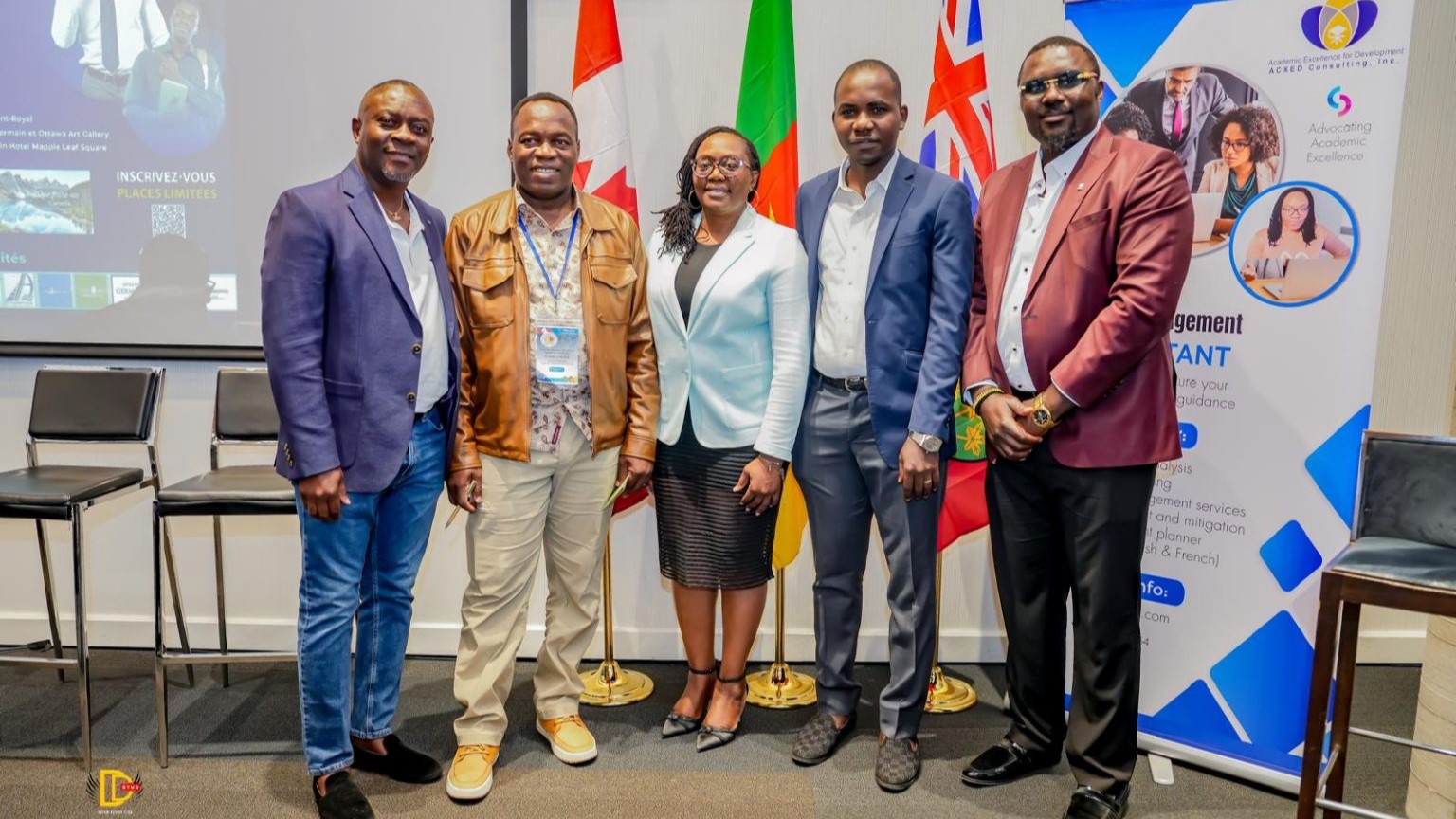
The second edition of the Cameroon-Canada International Economic Forum (FORECICC) was held from June 10 to 20, 2026, in Toronto, bringing together businesses, entrepreneurs, municipalities, investors, policymakers and members of the African diaspora. The forum’s stated mission was to strengthen economic, commercial and decentralized cooperation between Cameroon and Canada while creating opportunities for businesses and communities to work across borders.
Its 2026 programme was built around the theme “Village du Made in Cameroon”, with exhibitions, business-to-business meetings, practical workshops, cultural programming and opportunities connected to the FIFA World Cup taking place in Toronto. The organizers also promoted participation from Cameroonian SMEs and municipalities alongside Canadian partners.
The significance of the forum extends beyond a 10-day event.
It reflects a broader question facing African diaspora communities in Canada: How can cultural connections be converted into commercial relationships, investment and long-term economic cooperation?
FORECICC was designed to address that question.
Who Is FORECICC?

FORECICC stands for the Cameroon-Canada International Economic Forum, an international business platform focused on strengthening trade, investment and economic cooperation between Cameroon and Canada.
The 2026 edition was the forum’s second edition. According to the organizers, it brought together businesses, municipalities and other economic actors with the objective of developing mutually beneficial partnerships.
The forum’s official objectives included:
- Strengthening Cameroon-Canada economic and commercial cooperation
- Encouraging technology and knowledge transfer
- Stimulating bilateral investment
- Promoting sustainable trade
- Building networks between key economic actors
- Supporting SMEs in accessing international markets
- Developing partnerships between municipalities
- Promoting diaspora entrepreneurship and leadership
That positioning makes FORECICC different from a conventional cultural festival.
Culture was part of the programme, but economic cooperation was the central purpose.
Why Cameroon-Canada Trade Matters
The relationship between Cameroon and Canada extends across government, education, business, immigration and diaspora communities.
For entrepreneurs, however, the value of that relationship depends on whether connections can become actual business opportunities.
That can include exporting products, establishing partnerships, accessing technology, developing supply chains, attracting investment or helping African businesses understand Canadian markets.
FORECICC’s organizers positioned SMEs as an important part of this equation.
The forum’s official programming included training around agricultural standards, innovative project financing, craft competitiveness, sustainable textiles, smart municipalities and technology solutions.
That combination is significant because market access is rarely solved by a single business introduction.
Entrepreneurs also need knowledge.
They need standards.
They need financing.
They need reliable partners.
And they need to understand the markets they are trying to enter.
FORECICC attempted to bring those pieces into the same conversation.
The “Made in Cameroon” Marketplace
One of the defining elements of FORECICC 2026 was its “Village du Made in Cameroon” concept.
The idea was to create a space where Cameroonian businesses could showcase products and connect with potential customers, partners and investors in Canada.
The official programme promoted exhibition and sales opportunities for Cameroonian SMEs, alongside innovation showcases and B2B meetings.
For African businesses seeking international markets, that kind of physical exposure can be valuable.
A product that may be familiar in Cameroon can require a different presentation, packaging, certification or distribution strategy in Canada.
The forum’s workshops therefore included practical subjects such as food standards, international markets, textile development and digital transformation.
The objective was not simply to display products.
It was to help businesses understand what comes next.
FORECICC Connected Entrepreneurs With Canadian Markets
The forum’s business programme also extended into Ontario’s entrepreneurship ecosystem.
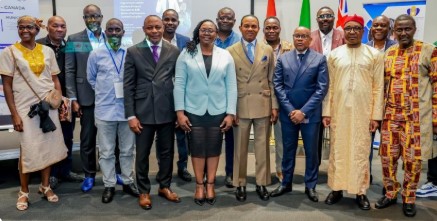
A post-event update from the Brampton Entrepreneur Centre and Invest Brampton said the City of Brampton’s economic-development office, working with Ontario’s Ministry of Economic Development, Job Creation and Trade, welcomed a delegation of Cameroonian government officials and business leaders as part of FORECICC 2026.
The programme explored stronger Canada-Cameroon collaboration around business investment, trade and economic growth.
The Brampton programme included keynote remarks from Omo Ogbamola, founder and CEO of Tripplemos Food Processing Company, and a fireside conversation with Denise Edwards, founder of Tropix Coconut Drops.
A panel titled “Building Global Brands from Brampton” featured entrepreneurs including Kendra Larry Jajawei of Kendras Cuisine, Christine Tolibas of Blush Me Up and real estate professional Nene Akintan.
That connection between FORECICC and Brampton is particularly relevant.
Brampton has a large and diverse immigrant business community, and programmes focused on export development can give local businesses a pathway toward international markets.
The meeting therefore created a two-way conversation rather than treating Cameroon solely as a destination for Canadian investment.
Cameroonian businesses were also being introduced to Canadian networks.
What Opportunities Did FORECICC 2026 Create?

FORECICC’s programme covered several areas where businesses can develop cross-border relationships.
Trade and Export Development
The forum promoted opportunities for Cameroonian businesses to present products and explore Canadian markets.
Investment
One of its core objectives was to stimulate bilateral investment between economic actors in Cameroon and Canada.
Technology Transfer
The organizers included technology and knowledge transfer among the forum’s stated priorities, particularly in areas such as agriculture, education and health.
Municipal Partnerships
FORECICC also placed unusual emphasis on municipalities, promoting decentralized cooperation and partnerships between local governments.
SME Development
Workshops focused on helping businesses improve productivity, quality, competitiveness and access to international markets.
Diaspora Engagement
The forum positioned Cameroonians living abroad as potential contributors to economic development rather than simply as cultural participants.
That last point may ultimately be one of the most important.
The African Diaspora as an Economic Bridge
Diaspora communities occupy a unique position in international business.
They understand the culture and consumer behaviour of their countries of origin while also navigating the institutions, markets and business environments of their adopted countries.
That creates potential advantages.
A Cameroonian entrepreneur in Toronto may understand Canadian customer expectations while maintaining relationships with suppliers, producers or entrepreneurs in Cameroon.
A Canadian investor may gain access to local knowledge through diaspora networks.
A municipality may find opportunities for cooperation through relationships established by community organizations.
FORECICC’s model attempts to turn that bridge into an economic platform.
It is an approach increasingly relevant as African diaspora communities across Canada become more active in entrepreneurship, professional networks and international trade.
FORECICC and the FIFA World Cup 2026 Opportunity
The timing of FORECICC 2026 was deliberate.
Canada hosted matches during the FIFA World Cup 2026, with Toronto among the Canadian host cities.
FORECICC’s official programme specifically included participation in World Cup matches alongside business, cultural and tourism activities.
That created a rare convergence.
International visitors were already arriving in Canada.
Businesses were looking for exposure.
African diaspora communities were preparing cultural programming.
And cities hosting World Cup matches were receiving global attention.
For the organizers, the tournament provided a backdrop for demonstrating African business, culture and entrepreneurship to a wider international audience.
The economic value of such moments, however, depends on what survives after the spotlight disappears.
A successful forum should therefore be judged not only by attendance or visibility but by the partnerships, contracts, investments and business relationships that continue afterward.
From a Forum to a Long-Term Cameroon-Canada Business Corridor
FORECICC’s own history provides an indication of where the organizers want the initiative to go.
The first edition, held in June 2025 across Montreal, Ottawa and Toronto, brought together approximately 300 participants, according to the forum’s published final report. The report identified opportunities in areas including ports, infrastructure, agro-industry, renewable energy, digital transformation, inclusive startup finance and municipal cooperation.
Among its recommendations were a proposed one-stop investment mechanism for the diaspora, stronger follow-up mechanisms for partnerships created through the forum and a fund to support co-innovation.
That history matters because it shows that FORECICC 2026 was not created in isolation.
It was the second stage of an initiative that had already identified specific economic gaps between the two countries.
The challenge now is continuity.
A forum can create introductions.
Building an economic corridor requires follow-through.
What Happens After FORECICC 2026?
The strongest measure of FORECICC will not be how many people attended its sessions.
It will be what happens after they return home.
Did businesses secure Canadian distributors?
Did Canadian companies establish partnerships in Cameroon?
Did SMEs improve their ability to meet international standards?
Did diaspora entrepreneurs become investors?
Did municipal relationships develop into concrete projects?
Did the B2B meetings produce contracts?
Those outcomes take time to measure.
But they are also what could determine whether FORECICC becomes an annual business fixture or remains primarily an event.
The organizers have indicated that the forum is intended to continue annually or biennially, suggesting a long-term ambition for the platform.
That ambition gives the initiative a larger responsibility: maintaining a transparent record of partnerships, investments and commercial outcomes generated through each edition.
A Different Way to Think About African Diaspora Economic Power
FORECICC 2026 offered a useful example of how diaspora engagement can move beyond cultural representation.
The “Made in Cameroon” concept put products in front of new markets.
The business programme created opportunities for entrepreneurs to meet potential partners.
Municipal programming opened conversations around local economic development.
Technology workshops addressed practical barriers to competitiveness.
And the FIFA World Cup provided an international backdrop capable of bringing additional attention to the initiative.
None of those elements guarantees economic success.
But together they create the conditions for something more durable than a single event.
For Cameroon and Canada, the opportunity is to turn diaspora relationships into sustained commercial relationships.
For African entrepreneurs in Canada, it is a reminder that international markets can begin with relationships much closer to home.
And for the wider African diaspora, FORECICC represents an increasingly important question:
What happens when cultural connections become economic connections?
The answer will not be determined by one conference.
It will be determined by the businesses, investors, municipalities and entrepreneurs who continue the conversations after the banners come down.