
A landmark deal reshapes U.S. foreign health aid — and signals bigger implications for Africa and the diaspora
The United States has entered a groundbreaking five-year health agreement with Kenya, committing more than $1.6 billion to strengthen the country’s healthcare systems under the Trump administration’s newly unveiled “America First Global Health Strategy.”
- A landmark deal reshapes U.S. foreign health aid — and signals bigger implications for Africa and the diaspora
- A Major Shift: From NGO-Driven Aid to Government-Led Systems
- The Numbers Behind the Shift
- Why This Matters for the African Diaspora
- 1. Improved Healthcare Access for Relatives in Kenya
- 2. A More Self-Reliant African Health Sector
- 3. Opportunities for Diaspora Health Professionals
- 4. A New Template for U.S.-Africa Relations
- Ruto Praises Pact, Promises Accountability
- A New Chapter in Global Health Cooperation
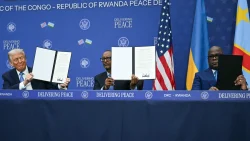
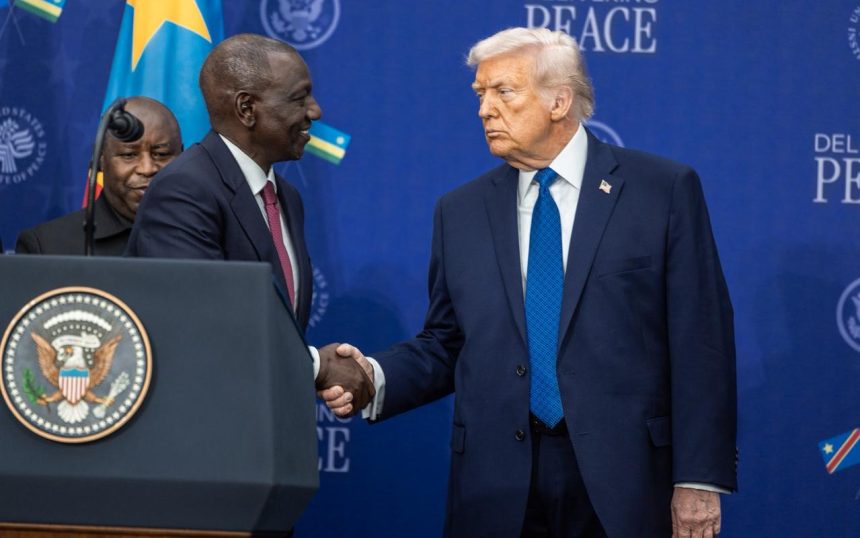
Signed on Thursday in Washington by U.S. Secretary of State Marco Rubio and Kenyan President William Ruto, the pact is the first of its kind since the administration overhauled U.S. foreign aid earlier this year. The strategy shifts focus toward greater financial responsibility for partner countries, prioritizing long-term self-reliance over prolonged aid dependence.
A Major Shift: From NGO-Driven Aid to Government-Led Systems
In a sharp departure from previous global health models, the U.S. will now send the bulk of its funding directly through the Kenyan government, reducing reliance on international NGOs — which Rubio criticized as part of an “NGO industrial complex” that he said absorbed too much aid meant for patients.
Under the agreement:
- Kenya will increase its domestic health spending by $850 million over five years.
- U.S. funding will transition government systems to take full responsibility for health workers previously financed by U.S. programs.
- Faith-based health providers will, for the first time, receive government reimbursements on the same level as private facilities.
This model follows the dissolution of the U.S. Agency for International Development (USAID), marking one of the most dramatic restructurings of U.S. development policy in recent history.
The Numbers Behind the Shift
Before aid cuts began in 2025, the U.S. contributed $440 million to Kenya’s health and population programs — with $310 million specifically for HIV/AIDS response. The new compact significantly scales up U.S. involvement even as it changes how resources are managed.
For Kenya, the investment comes at a pivotal moment as the country works to modernize health financing, improve access to essential medicines, and strengthen community-level disease control.
Why This Matters for the African Diaspora
For Africans in the diaspora — particularly Kenyan communities in the U.S., U.K., and Canada — the compact represents more than a political agreement. It touches on core issues affecting families back home, including:
1. Improved Healthcare Access for Relatives in Kenya
Stronger public systems, better-equipped hospitals, and more sustainable HIV, malaria, and TB programs reduce the burden on diaspora families who often send remittances for medical care.
2. A More Self-Reliant African Health Sector
The shift toward government-managed funding aligns with diaspora advocacy for African nations to build stronger, more accountable institutions rather than rely heavily on external NGOs.
3. Opportunities for Diaspora Health Professionals
As Kenya increases its own investment and expands health infrastructure, diaspora medical experts may find new pathways to collaborate, invest, or return for specialized work.
4. A New Template for U.S.-Africa Relations
With more African countries expected to sign similar deals in the coming days, the diaspora will be watching closely to see how this model reshapes long-term development, transparency, and health outcomes across the continent.
Ruto Praises Pact, Promises Accountability
At the Washington ceremony, President Ruto credited the U.S. with “saving millions of Kenyan lives” through past investments and welcomed the new model.
“I assure you that every shilling and every dollar will be spent efficiently, effectively, and accountably,” he said.
Rubio also applauded Kenya’s leadership of the multinational mission to stabilize Haiti — another effort closely followed by African diaspora communities in the Caribbean and North America.
A New Chapter in Global Health Cooperation
The $1.6 billion compact marks one of the most significant U.S.-Kenya agreements in a decade — and sets the tone for how the U.S. plans to engage Africa on health issues going forward.
With its emphasis on country-led responsibility and reduced NGO reliance, the deal may redefine not just Kenya’s health future but the broader trajectory of aid partnerships on the continent.