











For many Nigerians, a market is more than a place to buy and sell.
It is where stories are exchanged over fresh produce, where entrepreneurs build businesses one customer at a time, and where culture comes alive through food, fashion, music, and community. That spirit is exactly what Naija Market Day has set out to recreate across Canada.
What began as an effort to showcase African-owned businesses has evolved into one of the most recognizable travelling African market experiences in North America. Today, Naija Market Day serves as a bridge between cultures, connecting vendors, families, creatives, and entrepreneurs through a shared celebration of African heritage and commerce.
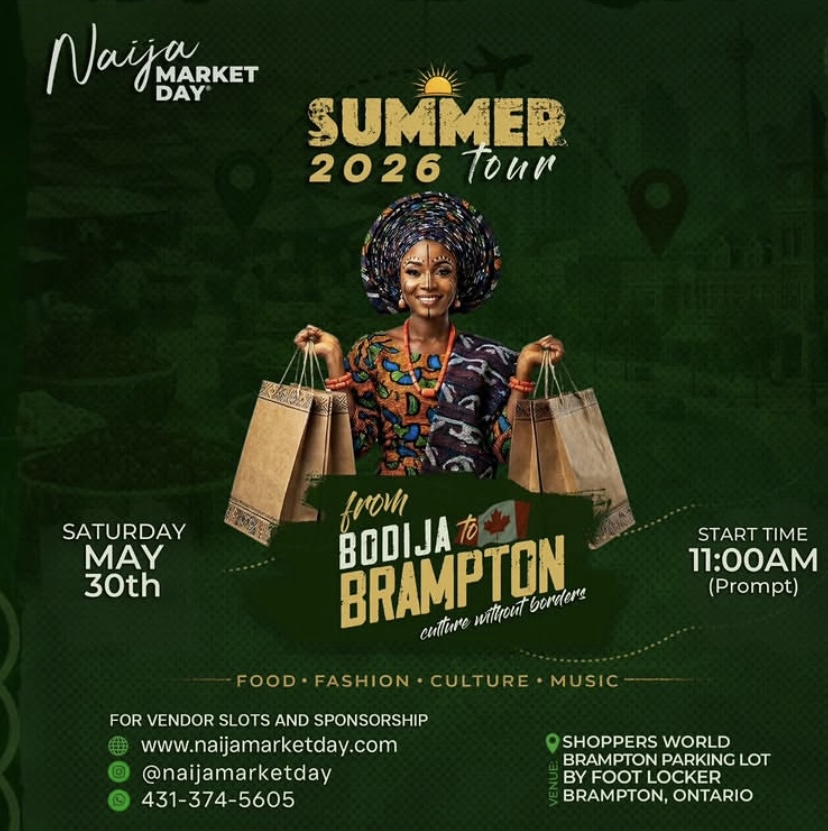
According to the organizers, the event has successfully toured multiple Canadian cities while creating opportunities for small businesses, artists, and cultural organizations to reach wider audiences.
The 2026 Summer Tour continues that mission with stops across ten Canadian cities. The tour officially kicked off in Brampton on May 30, 2026, under the theme “From Bodija to Brampton,” a nod to the famous Bodija Market in Ibadan and the enduring influence of Nigerian market culture.
This year’s tour features a collection of city-themed experiences that bring different Nigerian cultural identities into conversation with Canadian communities. Among them are:
- From Enugu to Edmonton
- From Warri to Winnipeg
- From Benin to Brandon
- From Onitsha to Ottawa
- From Lagos in London
- From Loud in Lethbridge.
Each theme reflects the organizers’ goal of transporting the energy and familiarity of iconic Nigerian cities and markets into Canadian public spaces.
The 2026 schedule includes stops in Brampton, Edmonton, Winnipeg, Moncton, Calgary, Hamilton, Brandon, London, Ottawa, and Lethbridge, creating a nationwide platform for African-owned businesses to showcase products ranging from fashion and beauty items to food, crafts, and cultural experiences.
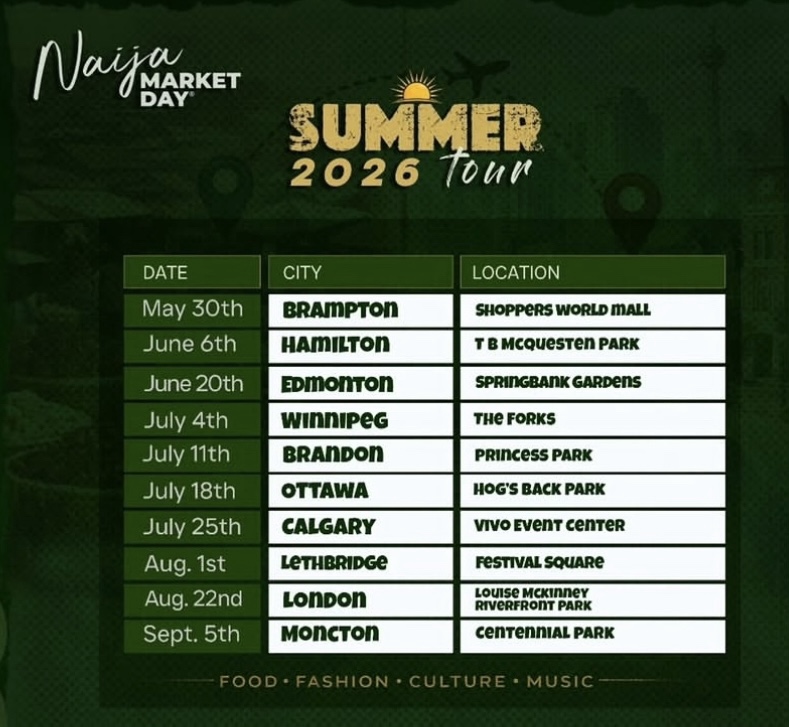
Visitors can also expect family-friendly entertainment, networking opportunities, live music, and community engagement throughout the tour.
What makes Naija Market Day particularly compelling is that it is not trying to replicate a trade show. Instead, it captures something far more familiar to many Africans in the diaspora: the feeling of home. Through events like From Bodija to Brampton, the organizers are preserving cultural memories while creating new ones. The result is a travelling marketplace where commerce meets community, and where the African diaspora can celebrate its heritage while introducing it to a broader audience.
As the 2026 tour continues its journey across Canada, Naija Market Day is proving that markets do more than move products. They move stories, traditions, and people. And in communities thousands of kilometres away from Nigeria, that connection has never felt more valuable.




Maryam Murtala’s Legacy: How Canada Vendors Became a Voice for Nigerian Entrepreneurs - Afro Diaspora Pulse
May 20, 2026[…] can connect with customers, communities and wider markets, including initiatives such as Naija Market Day, which showcases African-owned businesses through a travelling marketplace […]